
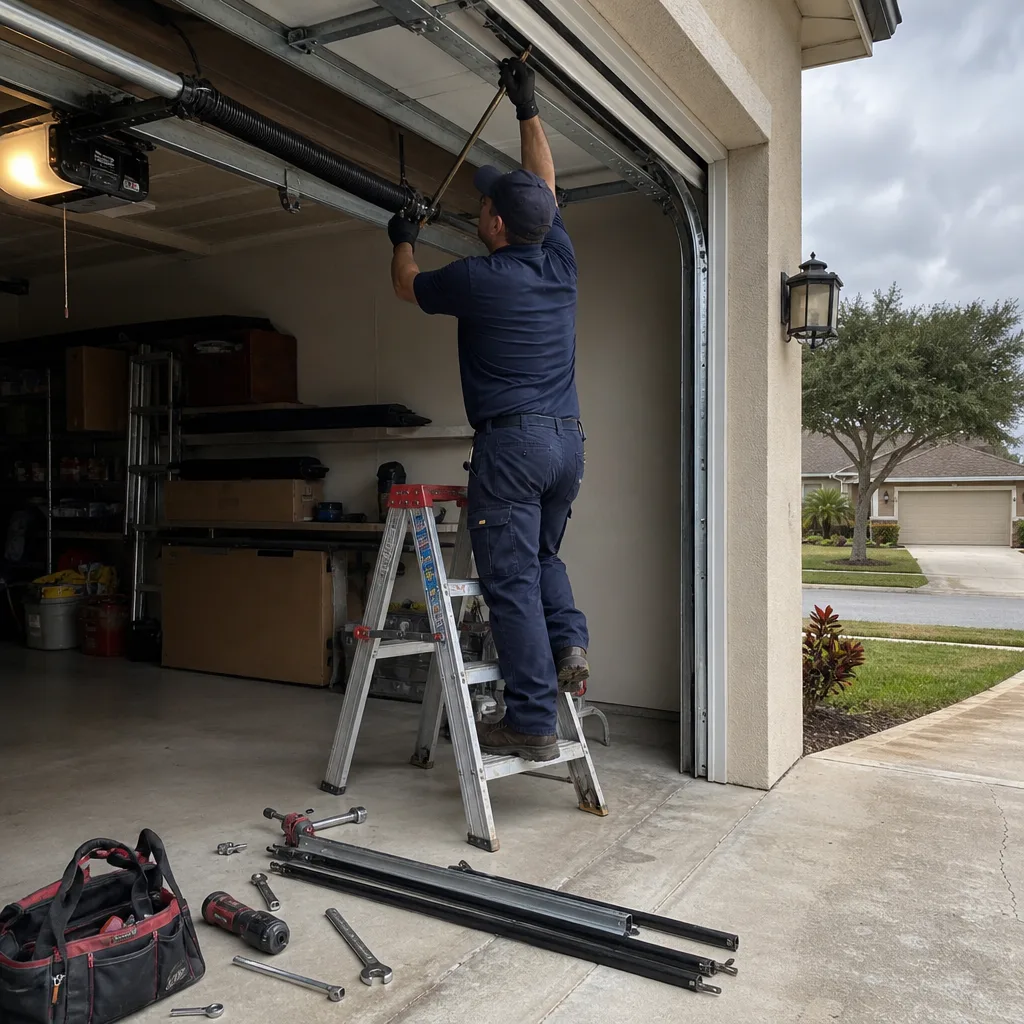
Last updated November 22, 2026
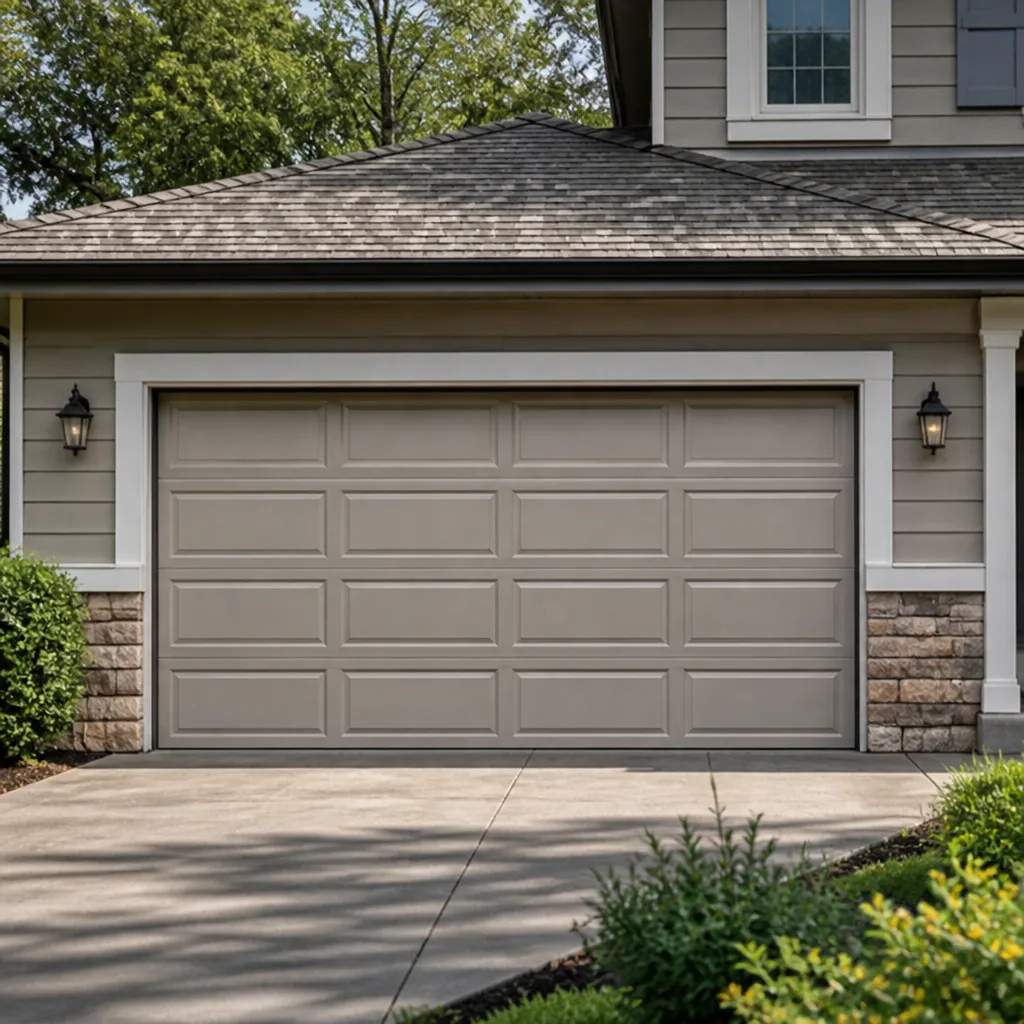 Raised-panel steel
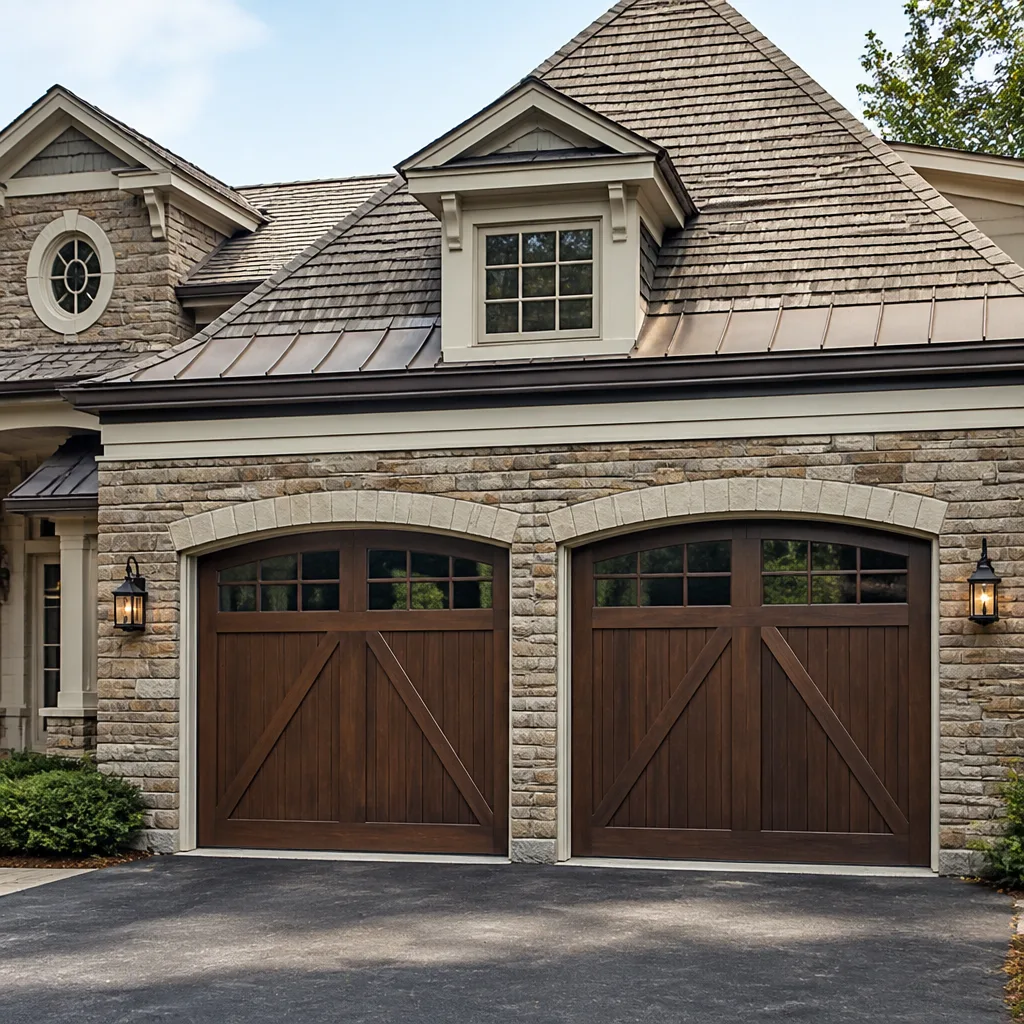 Carriage house
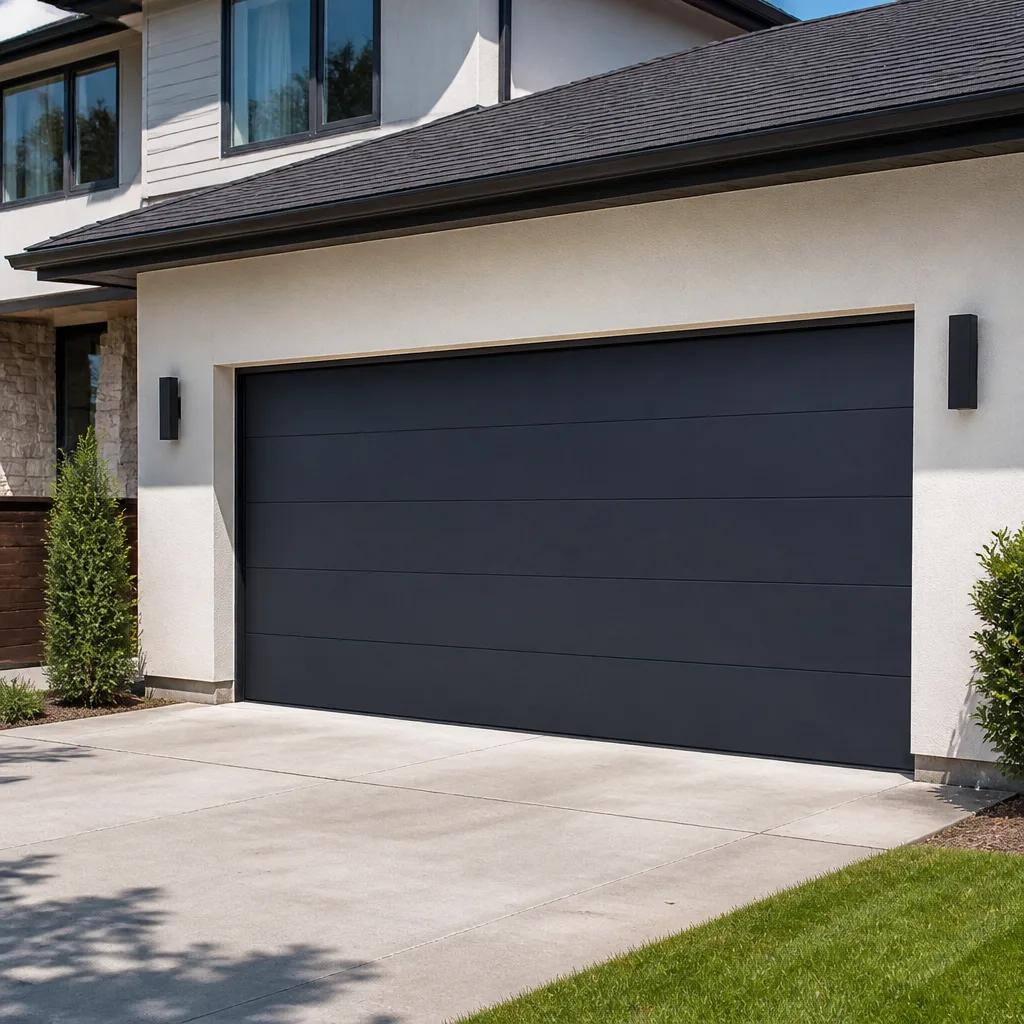 Modern flush
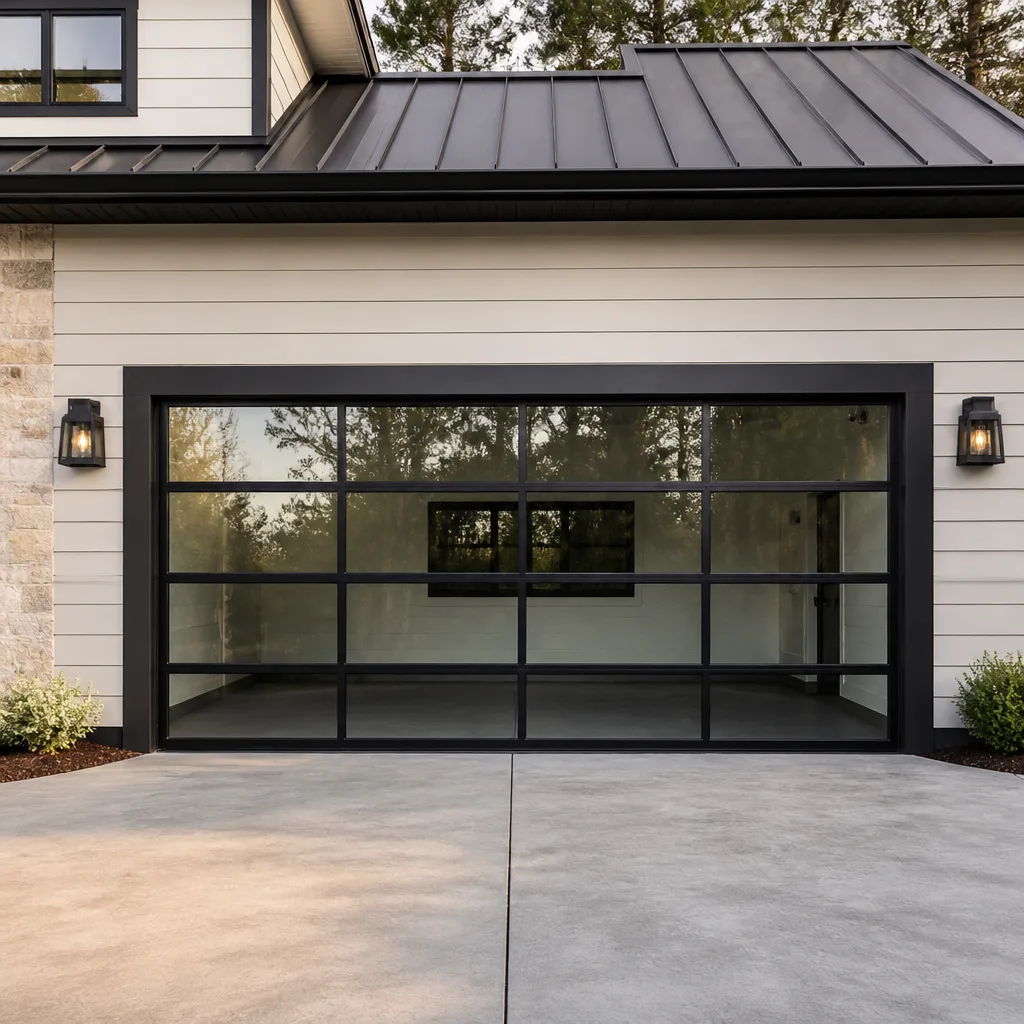 Full-view glass
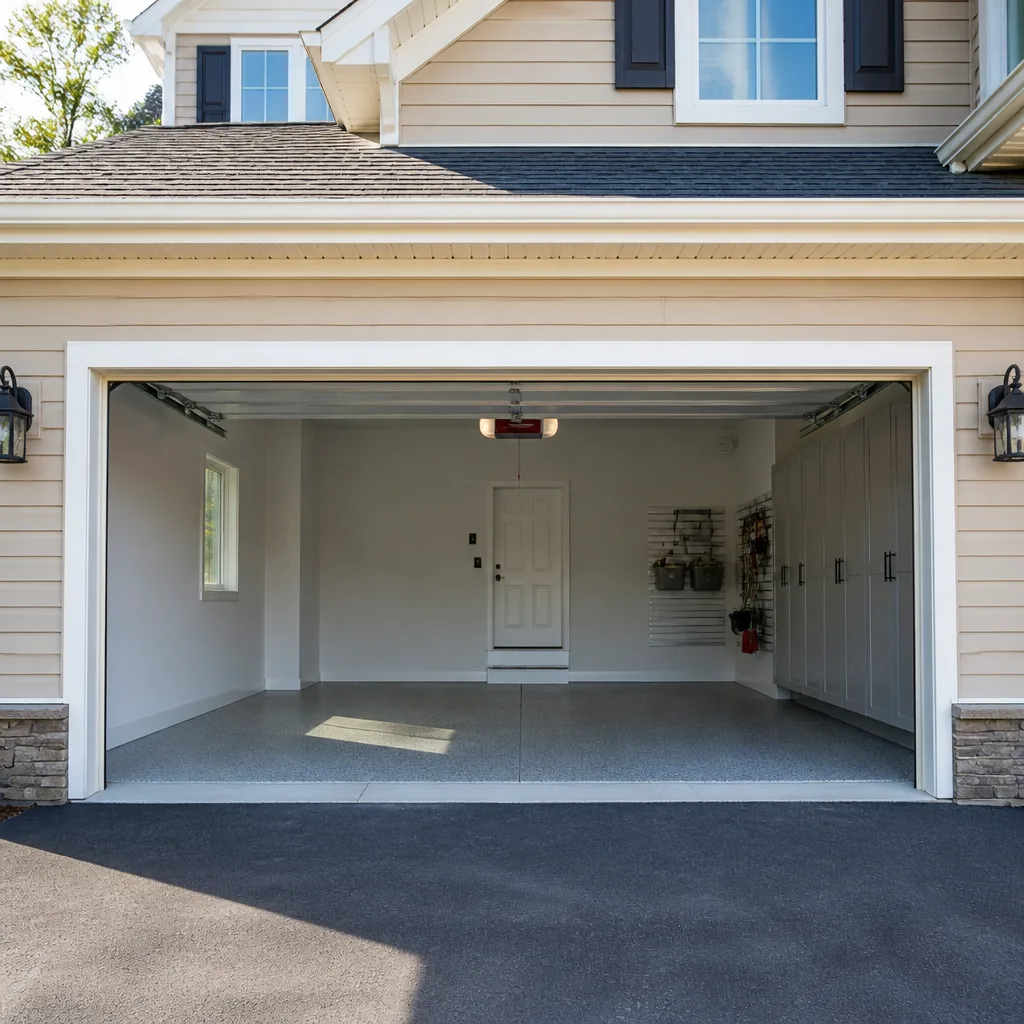 LiftMaster openers
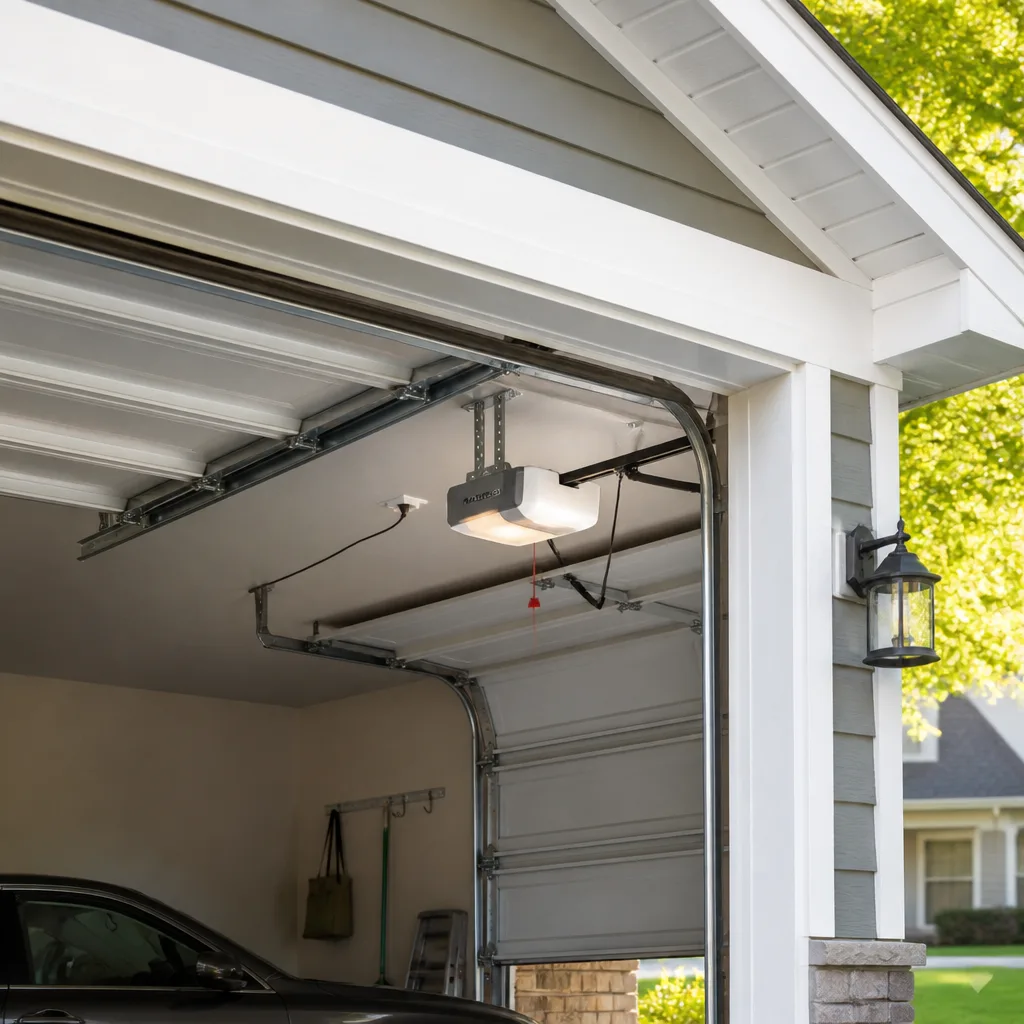 Chamberlain openers
Full 25-point door and opener safety check with every visit - springs, cables, rollers, tracks, and your LiftMaster or Chamberlain opener included
You get a price before we start. It does not change when the pro arrives.
Get your free estimateThe Complete Guide to Garage Doors in Plant City
Most garage door guides are written for a mythical average American home. Plant City homeowners don’t live in one. You deal with humidity that sits above 90% for roughly half the year, sandy soil that shifts under door frames as the ground moves, and a housing stock that runs from 1970s block homes near downtown to vinyl-sided builds finished in the 2020s out past James Redman Pkwy. Springs fatigue faster here. Wood warps differently. Openers pull more amps in the heat. None of that shows up in the generic advice. This guide covers the full picture for Plant City: how doors actually fail here, what materials hold up under Central Florida UV, what the code requires, and what the real cost of ownership looks like over the life of a door.
Quick Answer
A garage door in Plant City needs seasonal inspection, spring replacement roughly every 7 to 12 years depending on cycle count, and prompt attention to any cable fraying or door imbalance. Heat and humidity accelerate wear on springs, cables, and wood components, so the maintenance rhythm here runs tighter than manufacturer specs written for drier climates. Most repair work is straightforward; spring and cable work is dangerous and belongs with a trained specialist.
Styles & brands we work with
- Raised-panel steel
- Carriage house
- Modern flush
- Full-view glass
- LiftMaster openers
- Chamberlain openers
Table of Contents
- How Plant City’s Climate Shapes Garage Door Wear
- Door Materials Under Central Florida Sun: What Holds Up
- Old Downtown vs. Walden Lake vs. Stoneridge: What Your Home Was Built With
- Springs and Cables: Why They Fail Faster Here
- Openers in the Florida Heat: Brand Quirks and Capacity
- Permits and Code: What Hillsborough County Requires
- The Real Lifecycle Cost of a Plant City Garage Door
- A Twelve-Month Maintenance Rhythm for Plant City Homes
How Plant City’s Climate Shapes Garage Door Wear
Garage doors live in a hostile environment that most manufacturers don’t design for. Plant City sits in a stretch of Central Florida where summer dew points stay high for months, sun exposure is intense, and afternoon thunderstorms roll through with enough regularity to keep the air inside a closed garage humid nearly year-round. Springs, cables, hinges, and rollers all react to that. The pattern we see is consistent: doors installed in this climate need attention sooner than the maintenance schedule printed in the owner’s manual suggests.
Heat cycles and metal fatigue
Torsion springs, the workhorses that lift most modern doors, expand when the door opens and contract when it closes. Each open-and-close is one cycle. Manufacturers rate springs by cycle count, and a spring rated for 10,000 cycles on paper may give you noticeably fewer when it’s cycling in a garage that hits 130°F or higher in the afternoon. Heat doesn’t break a spring by itself, but it dulls the steel’s elasticity faster than cool, stable conditions would. That’s why a Plant City spring may weaken earlier than a neighbor’s identical spring installed in a drier climate.
Humidity and corrosion
Steel cables under tension in a humid garage are prime candidates for surface corrosion. A light dusting of rust on a cable isn’t a failure on its own. Rust that reaches the inner strands is. Once that happens the cable can fray without warning, and a snapped cable on a door with a live spring is a genuine safety problem. Visual inspection of the cables every few months catches most of it before it becomes serious. If you see frayed strands or a cable hanging slack, stop using the door and call a professional.
- Springs: cycle out faster under sustained heat; listen for the change in the door’s sound as one indicator
- Cables: watch for rust, slack, or visible fraying on both sides
- Rollers: nylon rollers harden and crack; steel rollers rust and drag
- Hinges: lubricant breaks down faster; squeaks develop sooner
- Wood panels: seams absorb moisture; bottoms rot if they’re sitting near a wet slab
- Weatherstripping: rubber seals dry out and crack within a couple of summers
None of this is a reason to panic. It’s a reason to inspect and lubricate more often than the manual says, and to take a change in the door’s behavior seriously. When the door starts sounding different, something is wearing.
Door Materials Under Central Florida Sun: What Holds Up
An installed garage door faces one of the most demanding exterior environments a residential product can face. Full-sun exposure on a west-facing wall in Plant City means surface temperatures that can be hot to the touch in the afternoon and then cool rapidly when a summer storm arrives. That cycle repeats hundreds of times a year. Material performance in that environment is the deciding factor in how the door looks and functions ten years down the road.
Steel doors
Steel is the most common material in Florida homes for good reason. It’s stable under UV, holds paint or baked-on finish well, and doesn’t expand and contract dramatically with humidity. Heavier gauge steel resists denting better and holds its finish longer than the thinner 24 or 25-gauge panels common on builder-grade doors. Fade is the main cosmetic issue: cheaper finishes can chalk or fade within five to seven years under sustained Florida sun. Premium finishes on brands like Clopay and Amarr hold up noticeably longer. Steel also insulates better than wood, which matters if the garage shares a wall with the house.
Wood doors
Wood is where Plant City’s humidity shows most clearly. A wood door is a set of panels joined to framing, and every joint absorbs and releases moisture with the seasons. Over a few years, seams open, panels cup, and the bottom of the door can rot where it sits close to a wet slab. Routine repainting helps and is genuinely necessary, but the maintenance cycle on a wood door in this climate is real. Wood is beautiful and worth it for homeowners who want the look and are prepared for the upkeep. It’s a poor match for anyone wanting to ignore the door for years at a time.
Fiberglass and composite doors
Fiberglass is stable against rot and doesn’t mind humidity. The failure mode is different. Fiberglass doors can delaminate where the outer skin separates from the core, and the gel coat can chalk and fade faster than a good steel finish under intense UV. Composite doors built over a steel frame tend to perform better than straight fiberglass, especially when the overlay is bonded correctly. Inspect the edges and bottom of any fiberglass door periodically for the first signs of separation.
Aluminum doors
Aluminum doesn’t rust, which is its main selling point in humid climates. It also dents more easily and conducts heat, so an aluminum door can feel noticeably warmer to the touch and brings less insulation value. Full-view aluminum doors with glass panels are a design-forward choice and hold up cosmetically if you accept the tradeoff on impact resistance.
For most Plant City homes, steel in a heavier gauge with a well-finished surface gives the longest low-maintenance run. Wood rewards the homeowner who is committed to upkeep. Fiberglass and aluminum are viable with the caveats above. The exact door that’s right depends on the look, the insulation needs, and how much maintenance you’re realistically going to do. That’s a conversation worth having with a specialist before ordering.
Old Downtown vs. Walden Lake vs. Stoneridge: What Your Home Was Built With
Plant City’s housing stock is spread across several eras, and the age of a home tells you a lot about the door that’s on it, the opener behind it, and what a replacement will involve. A homeowner in Walden Lake is often working with a different set of standards than someone in an older block home near downtown, and knowing the difference saves time and prevents surprises during a service call.
Older homes near downtown
Homes built in the 1970s and earlier around downtown Plant City often include garages sized to the era. Single-car garages were more common, and openings of 8 or 9 feet wide by 7 feet tall are standard. The doors installed originally were often wood or early steel, and many have been replaced at least once. Openers on these homes, when present, tend to be older chain-drive units, frequently a Genie or Craftsman from a past decade. Electronics in old openers sometimes fail before the mechanical parts, and a straight replacement is often the cleaner path than repair. Older garage slabs also shift more. A slab that has moved with Plant City’s sandy soil can throw a door out of level, causing uneven seal contact at the bottom.
Newer builds in Walden Lake
Walden Lake homes from the 1980s through the 2000s typically came with two-car garages and 16-by-7-foot openings. Many of these doors are steel raised-panel or carriage-style, and many were installed with LiftMaster or Chamberlain openers. The doors themselves are often still serviceable into their second decade with good maintenance, and the common jobs on these homes are spring replacement, opener repair, and roller/hinge refresh. If you’re in Walden Lake and your door is original, spring replacement is typically the biggest single job you’ll face, and a matched pair should be replaced together for balance.
Newer subdivisions off James Redman Pkwy and Stoneridge
Homes built more recently, including many in Stoneridge and subdivisions off James Redman Pkwy, come with doors that are often 8 feet tall instead of 7. That height change matters for two reasons. First, spring sizing differs and cannot be swapped from a 7-foot door. Second, openers need to be rated for a heavier door, and a common mistake in these homes is a builder-grade opener that’s close to its limit from day one. If you own a newer-built home and the opener feels strained, especially in summer, it’s worth checking the capacity against the door’s actual weight. Manufacturers rate openers by door weight and door height, and a 7-foot opener on an 8-foot door is a mismatch.
Newer builds also frequently come with Wayne Dalton doors, which use proprietary spring systems on some models. Those systems work, but they need to be serviced by someone familiar with the brand. The same goes for Amarr and Clopay door models with specific panel profiles. Knowing the brand on your door speeds up every service call, and it’s worth writing down the model when you move in or when a door is replaced.
Springs and Cables: Why They Fail Faster Here
Springs and cables are the two components that make a door safe to lift and safe to keep overhead. When either fails, the door can come down hard or the door can become unmanageable by hand. This is the single most dangerous part of garage door work, and one of the most commonly mishandled repairs by non-specialists. A torsion spring is under extreme tension even when the door is closed. Attempting to adjust or replace one without the right winding bars and training is a fast way to get seriously hurt.
How a spring fails
Torsion springs fail at the coil. The first sign is usually a loud snap when the door is opened, followed by the door becoming very heavy or not opening at all. A door that lifts only a few inches and stops has almost certainly lost its spring. Extension springs, common on older doors, fail differently and can leave a visible gap at the end of the spring. Extension springs should always have a safety cable running through them; if yours doesn’t, that’s a code concern worth addressing.
How a cable fails
Cables run from the bottom corners of the door up to the drums on the torsion bar (or to extension springs on older doors). Corrosion weakens individual strands, and a cable can fail with little warning. When a cable breaks, the door typically jams at an angle and cannot be operated. Don’t force it. Force on a jammed door can bend the tracks and turn a cable job into a much bigger repair.
Why heat matters
Springs are rated by cycle count, and heat affects steel. A spring that would last 10,000 cycles in a mild climate loses some of that life in a hot garage. In Plant City, spring replacement every 7 to 12 years is a realistic planning window for a door in regular daily use. Heavier doors work their springs harder, and a door that runs two or three times a day wears its springs faster than a door used once. If you don’t know when your springs were last replaced, having them inspected is a reasonable first step.
For homeowners who want the full picture on spring sizing and replacement options, our garage door spring repair page covers the specifics. Springs are the one part on a door where the “do it yourself” instinct is genuinely dangerous, and the money saved is small next to the risk.
Openers in the Florida Heat: Brand Quirks and Capacity
An opener lives in the hottest, most humid room in most Plant City homes. Electronics don’t like heat, motors work harder in humid conditions, and a chain or belt drive that was quiet when new can start to struggle after several summers. The good news is that openers are among the most repairable parts of a garage door system, and brand familiarity makes a real difference in diagnosis speed.
Common failure patterns in the heat
- Logic board failures: the opener’s control board is often the first electronic component to fail in sustained heat. Signs include erratic light behavior, no response to remotes, or the opener clicking without moving.
- Capacitor failure: the start capacitor gets worked harder in heat and can fail, leaving the opener humming without moving the door.
- Safety sensor alignment: sensors at the bottom of the tracks are sensitive to sunlight and to dust. A sensor that worked in winter can start misbehaving when the sun hits it in summer.
- Force adjustments drifting: a door that’s grown slightly heavier with a tired spring leaves the opener working near its limit. Don’t turn up the force to compensate; fix the door.
- Remote and wall control failures: remotes and wall buttons go out, often separately from the opener itself.
Brand-specific notes
LiftMaster and Chamberlain openers share a lot of internal architecture, so a technician familiar with one is generally familiar with the other. Genie openers have their own control board layout and remote pairing procedures, and older Genie screw-drive models have a distinct failure mode in the drive mechanism that shows up after years of heat exposure. Craftsman openers (many of them built by Chamberlain under contract) behave similarly to Chamberlain units and are often the easiest of the older brands to keep running with parts still available. Wayne Dalton openers and door systems are paired on some installations, and the integrated approach works well but needs someone who knows the brand.
When an opener is failing, the right answer is sometimes repair and sometimes replacement. A modern opener with a battery backup (a genuinely useful feature in Florida storm season) is worth considering when an older unit is on its last legs. Our garage door opener repair page walks through diagnosis and options in more detail. For openers that are simply getting tired, a professional inspection tells you which direction makes sense.
Permits and Code: What Hillsborough County Requires
Garage door work is not the wild west of home repair, but it isn’t uniform either. Whether you need a permit depends on what’s being done. General repairs – replacing a spring, a cable, a roller, a hinge, an opener, or a panel – typically do not require a permit. A full door replacement is different. Many jurisdictions, including parts of Hillsborough County, require a permit for replacing a garage door because the door and its attachment to the structure matter for wind resistance and for life safety.
The exact requirement depends on your address, your property’s specifics, and the current code cycle. The most reliable source of truth is the Hillsborough County building department. Before scheduling a full door replacement in Plant City, call them or check their current permit guidance for your address. A specialist who does this work regularly will know the current requirement and can help you understand what the process looks like, but the confirmation should come from the building department itself.
Safety features the code cares about
- Photo-eye sensors on openers: required on all openers installed since the early 1990s. These are the sensors at the bottom of the tracks that reverse the door if something crosses the beam.
- Safety reverse function: the door must reverse when it hits an obstruction. This can drift out of adjustment over time and should be tested periodically.
- Extension spring containment: extension springs must have a containment cable running through them so a broken spring cannot fly free.
- Door attachment: the brackets, hinges, and track attachment points must be sound. A door that lifts out of its track is a hazard.
Wind considerations in Central Florida
Hurricane season is part of life here, and a garage door is the largest opening on most homes. Wind-rated doors and reinforced attachment hardware matter for homes in exposed areas. If you’re replacing a door and want to improve wind resistance, the time to make that decision is before ordering. Not every door is rated for every wind pressure zone, and the local building department can tell you what’s applicable at your address.
The Real Lifecycle Cost of a Plant City Garage Door
Manufacturer marketing tends to quote a door’s lifespan without accounting for climate. A 20-year door in a mild, dry climate is a different product from a 20-year door in Central Florida, where humidity and heat work on every component. Here’s the more realistic view of what a garage door actually costs to own in Plant City over time.
- Springs: expect replacement every 7 to 12 years in regular daily use. That’s the single most predictable cost.
- Cables: inspect regularly; replace when rust or fraying appears. Cable life varies a lot with garage humidity.
- Rollers and hinges: small parts that wear and cause noise and drag. Replacing them is cheap relative to the door’s life.
- Openers: typically 10 to 15 years for a well-maintained unit. Heat can shorten that.
- Weatherstripping: dry-rotted within a few summers, and replacing it is inexpensive insurance against water intrusion.
- Paint or finish: wood doors need repainting every 3 to 5 years in this climate. Steel finishes hold up far longer.
- Full door replacement: most common in this climate at 15 to 20 years, though a well-made steel door with a stable finish can go longer.
Add those up over 15 years and the picture is clear: routine maintenance, timely spring replacement, and prompt attention to cables and openers is almost always cheaper than letting a door go until it fails. A door that’s been neglected for a decade tends to fail all at once, often on the same day the homeowner needs it most. Good maintenance buys you predictability, and predictability is worth something in a storm season.
A Twelve-Month Maintenance Rhythm for Plant City Homes
Here’s a maintenance rhythm that fits Plant City’s climate. The key idea is smaller, frequent checks rather than waiting for the door to fail.
- Every month: listen to the door as it opens and closes. Sound tells you a lot – a grinding roller, a searching opener, or a cable beginning to drag all change the noise. Test the safety reverse function by placing a small object across the opening. Check that both photo-eye sensors have their lights solid.
- Every three months: visually inspect both springs (look for gaps at the coil ends) and both cables (look for rust, fraying, or slack). Look at the rollers for cracks. Wipe dust off the photo-eye lenses.
- Every six months: lubricate hinges, rollers, and the torsion bar bearing plates with a proper lubricant. Don’t put grease on the tracks themselves – they should run dry. Check that the weatherstripping along the sides and bottom is intact.
- Annually: test the safety reverse on both upward and downward travel. Check that all bolts and brackets are snug. If you’ve never had the springs inspected and the door is more than 7 years old, having a specialist look at them is a smart step.
- Before hurricane season: confirm the door is properly attached, any wind-rated hardware is intact, and nothing has loosened over the year. Look at the seal around the opening for gaps that could let water in.
That’s a few hours of attention a year. Skip it and the door will eventually demand more, usually at the worst possible time. Every homeowner’s comfort level is different, and some parts of this checklist (especially the spring and cable inspection) are worth having a specialist do once a year. For the bigger repairs, our garage door repair page covers what’s involved.
Common Mistakes to Avoid
- Turning up the opener’s force to compensate for a tired door. Increasing the force on a door with a weakened spring or dragging rollers doesn’t fix the problem, it just masks it until the opener fails under the load. Diagnose the door first.
- Replacing one spring when a matched pair is worn. If one spring of a matched pair fails, the other is usually the same age and close to failure. Replacing the pair together keeps the door balanced and saves a second service call.
- Greasing the tracks. It’s intuitive to lubricate everything, but the tracks should run dry. Grease in the tracks attracts grit and causes the rollers to drag.
- Ignoring a small bottom-panel dent until it cracks. A minor dent that causes rust or starts to separate at the panel edge is cheaper to fix early than after water has gotten behind it. Plant City humidity speeds up the process.
- Buying the cheapest replacement opener without checking capacity. A builder-grade opener on an 8-foot, heavier door off James Redman Pkwy is working near its limit from day one. Match the opener to the door.
- Attempting a spring repair without training. Torsion springs are under extreme tension. This is the repair most likely to cause serious injury when attempted by a homeowner, and it’s the one most worth calling a professional for.
- Letting a door sit out of balance. A door that hangs at an angle, or runs with the bottom of one side dragging, is putting extra stress on every component. It’s usually a cable or spring issue and worth fixing before it becomes a much bigger repair.
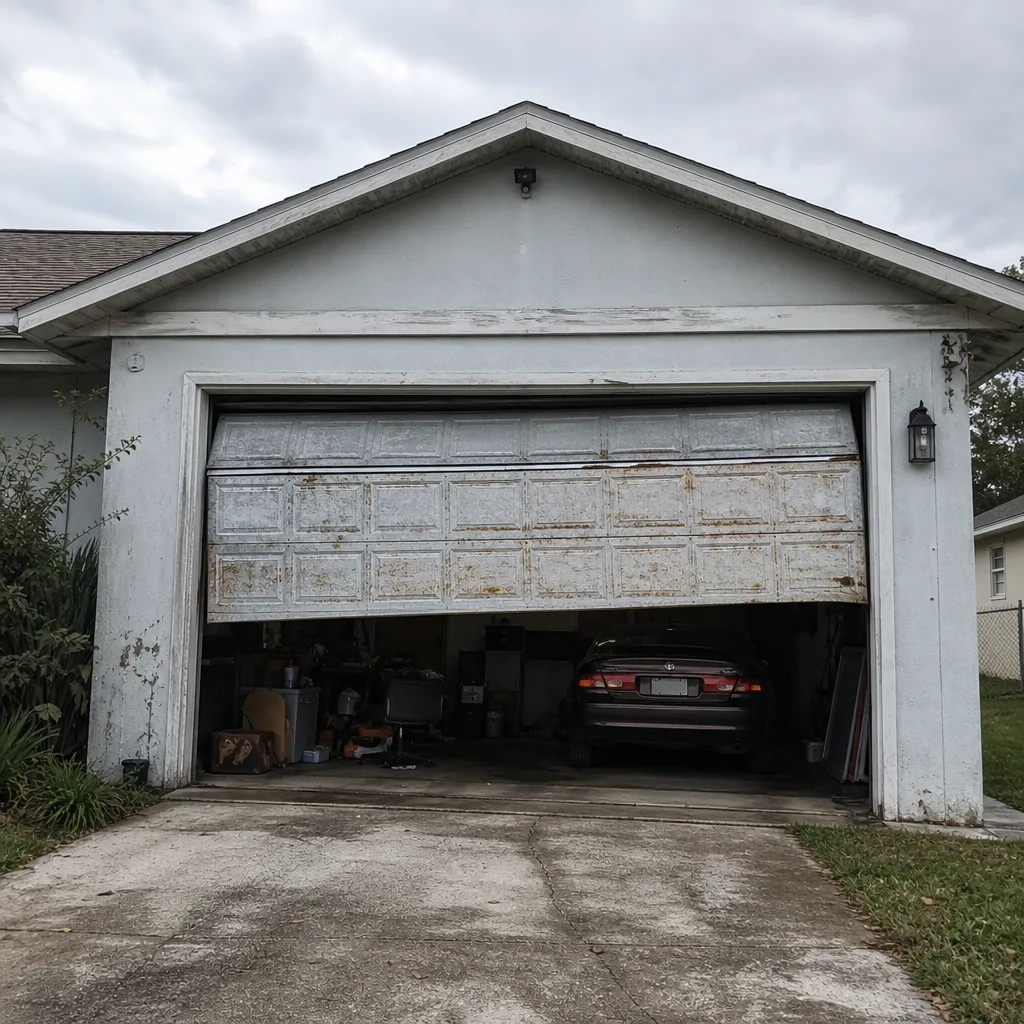
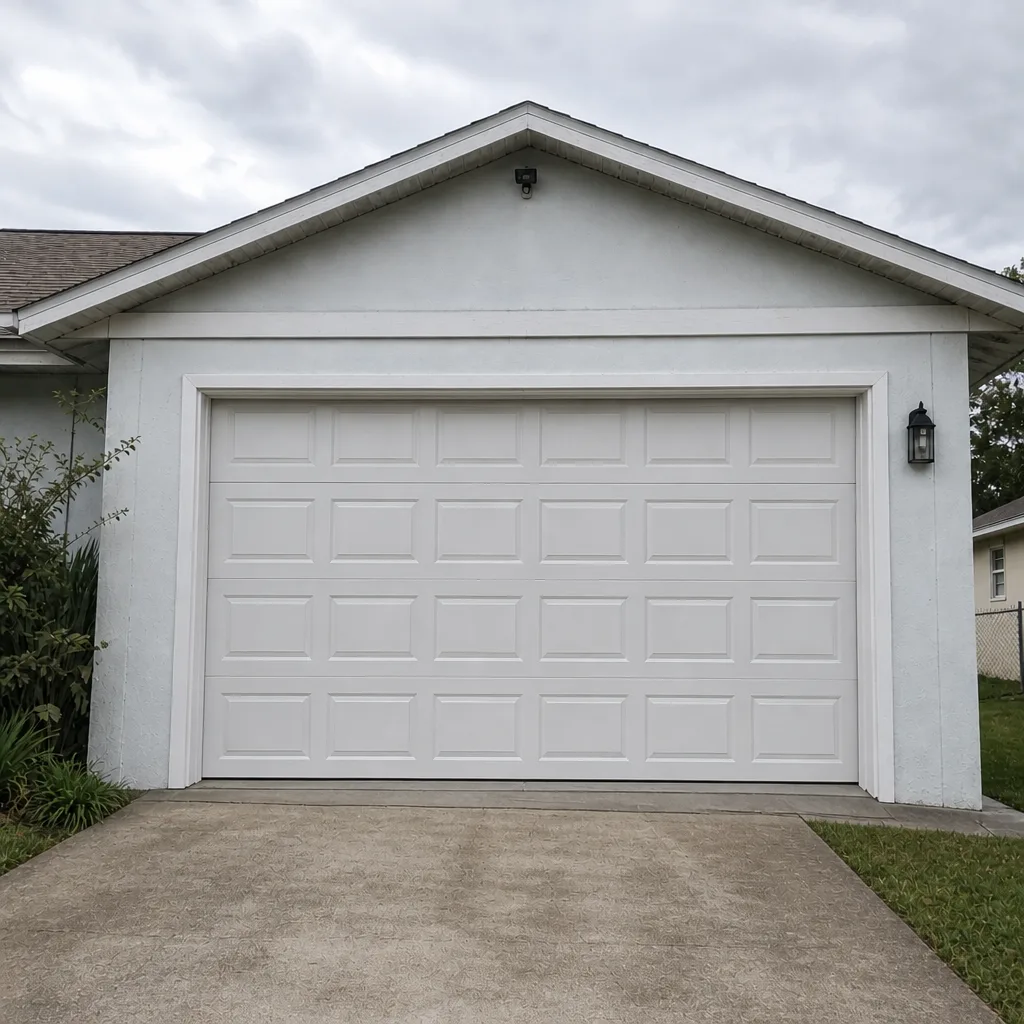
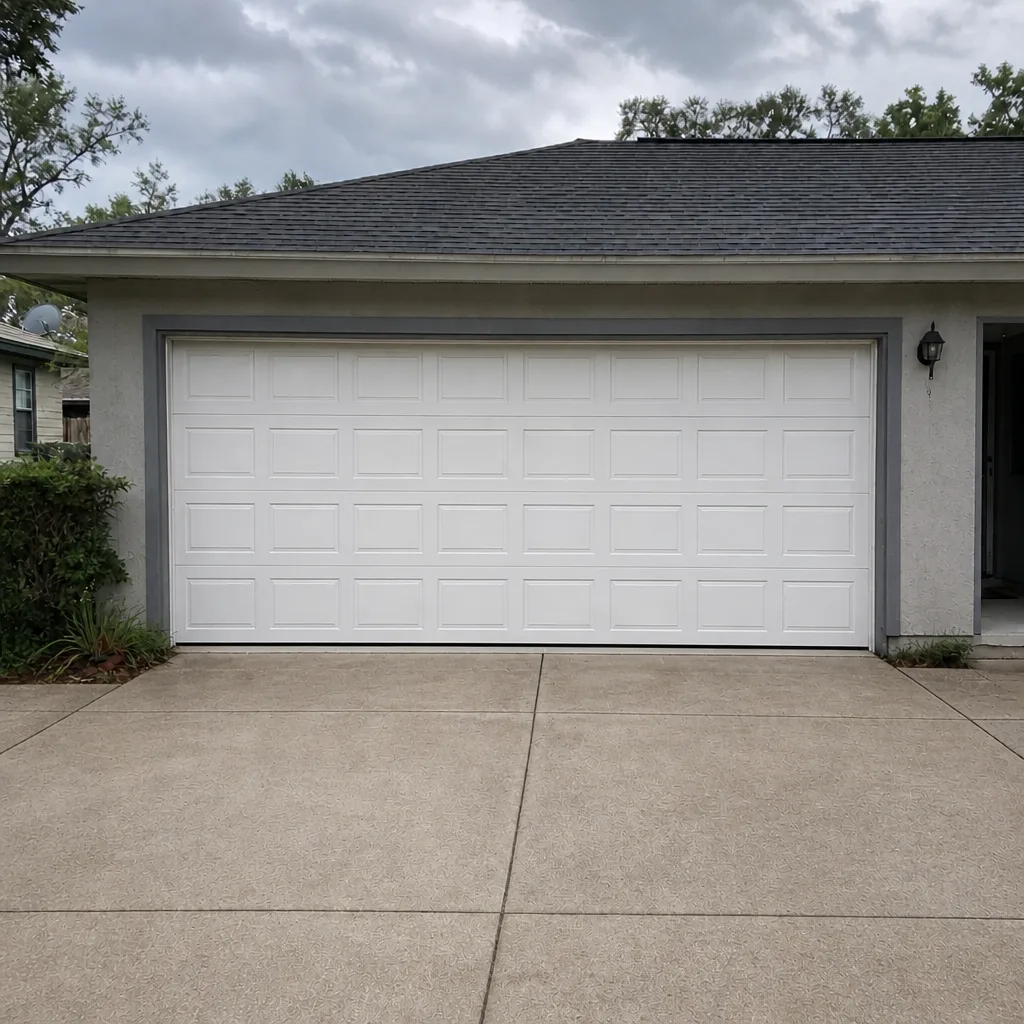
See the difference
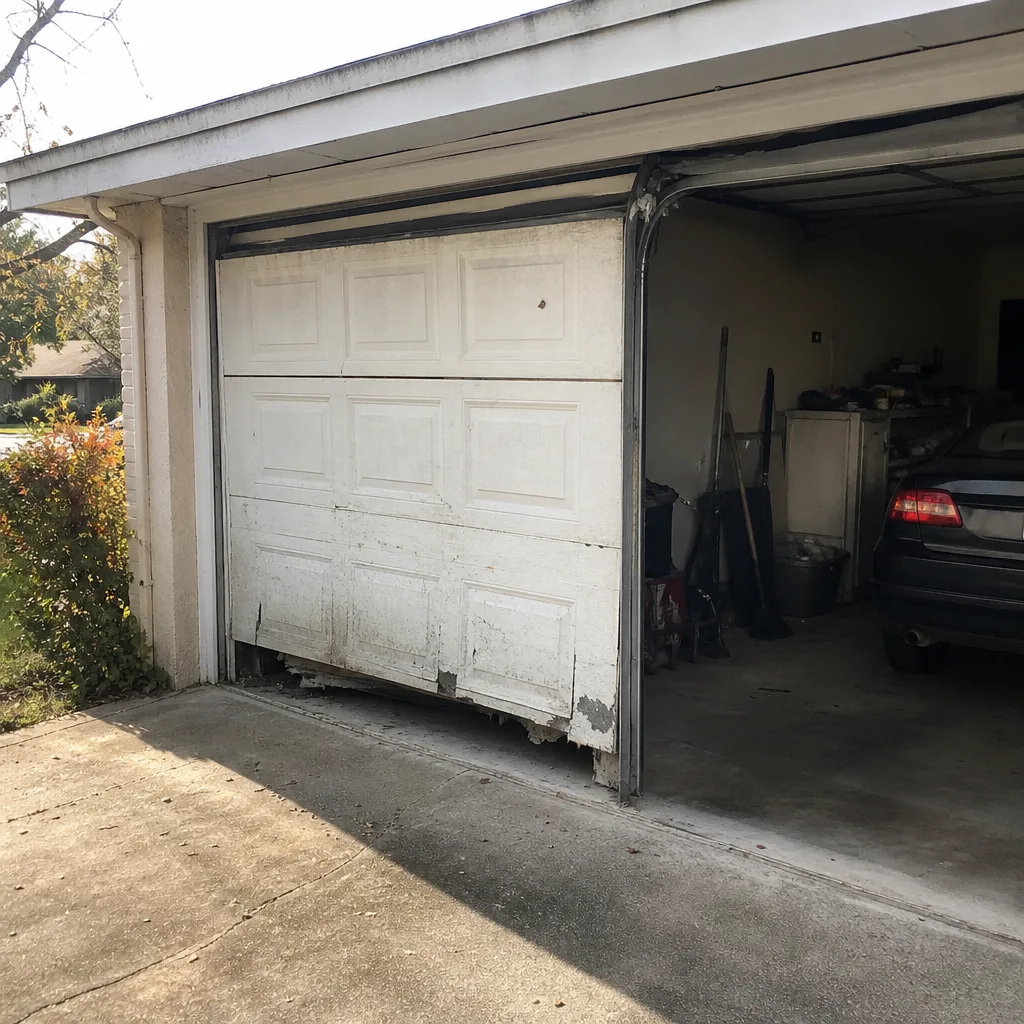 Before
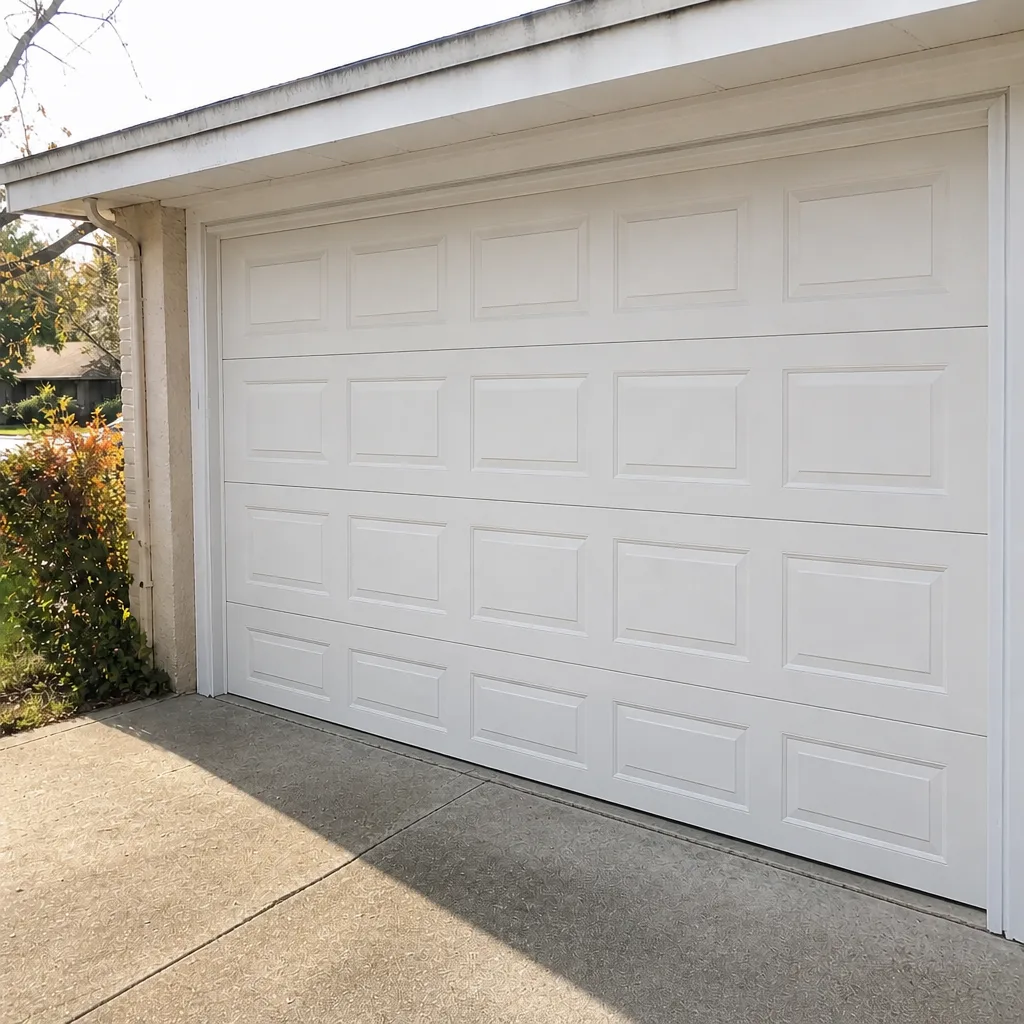 After
 Before
 After
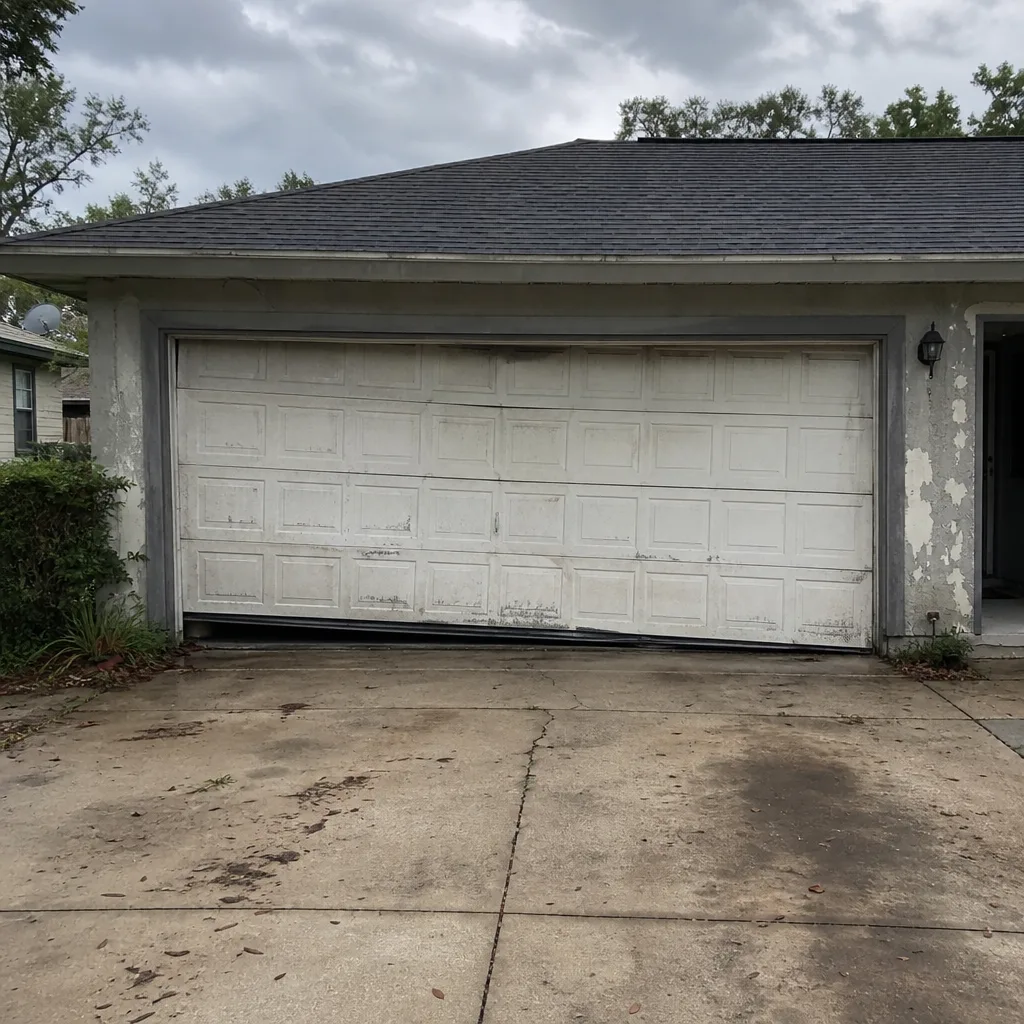 Before
 After
When to Call a Professional
Some door problems are worth watching. Others need a professional, and quickly. Call us if the door won’t open or close all the way, if you hear a snap and the door gets suddenly heavy, if a cable looks frayed or has gone slack, if the door is hanging at an angle, if the opener hums without moving the door, or if the safety reverse function fails its test. Those aren’t situations to sleep on. For spring and cable issues in particular, stop using the door and call a specialist rather than a general handyman. A garage door is a system with tension stored in it at all times, and the right technician is the one who knows how to release that tension safely.
For replacement work, the time to call is before deciding on the door. Choosing the brand and model with a specialist who services it matters – Clopay, Amarr, and Wayne Dalton all have model families that fit different homes and budgets, and a specialist who knows the brand can tell you what will actually last on your wall. As a company, Plant City Garage Door Repair Pros offers free estimates in Plant City for repair and replacement – call (866) 329-6292. We answer 24/7. Fast dispatch from 7am to 7pm, Sunday through Friday, and we’re closed Saturday. Our technicians have up to 10 years of experience, and we’re trained to service eight of the most widely installed garage door and opener brands, including LiftMaster, Chamberlain, Genie, Clopay, Amarr, Wayne Dalton, Craftsman, and Raynor. Estimates are free and the written estimate sets the final price.
Frequently Asked Questions
Typically 7 to 12 years in a Plant City home with regular daily use, which is shorter than what manufacturer specs written for drier climates suggest. Heat and humidity accelerate spring fatigue, and a door that cycles two or three times a day will wear its springs faster than one used once. If you’re unsure when your springs were last replaced, call (866) 329-6292 to have them inspected. Estimates are free.
Often yes, though the exact requirement depends on your address and the current code cycle, so confirm with the Hillsborough County building department before scheduling. Repairs like spring, cable, opener, or roller replacement typically do not need a permit. A full door replacement usually does, and the department is the definitive source for your specific property.
Heat is the main reason. The opener’s motor works harder in a hot garage, and its electronics can misbehave. At the same time, heat makes any wear in the door itself (springs, rollers, hinges) more pronounced, so the opener is pushing against a slightly heavier door. Sometimes the answer is a simple adjustment; sometimes a component on the door needs attention, or the opener itself needs repair. Call (866) 329-6292 and we’ll diagnose it. Estimates are free.
Heavier-gauge steel with a good baked-on finish is generally the best balance of durability, low maintenance, and UV resistance for Central Florida. Wood doors look great but need repainting every few years in this humidity, and fiberglass panels can delaminate and chalk under sustained sun. Aluminum resists rust but dents more easily. The right choice depends on your home, your budget, and how much maintenance you want. Brands like Clopay, Amarr, and Wayne Dalton each have strengths worth comparing.
The local professionals we connect you with are licensed and insured as their state requires. We’re a garage door specialist, not a general handyman service, and we’re trained to service eight of the most widely installed garage door and opener brands. Call (866) 329-6292 for a free estimate.
Often yes for common repairs like springs, cables, and openers, depending on parts availability. We answer 24/7. Fast dispatch from 7am to 7pm, Sunday through Friday, and we’re closed Saturday. Call (866) 329-6292 and we’ll give you a straight answer on timing. Any repair price is quoted and agreed before work starts, so there’s no surprise on the invoice.
No. The written estimate sets the final price, and you approve it before any work begins. We provide the estimate on-site, in writing, after assessing the door. If we find something unexpected during the job, we discuss it with you and quote any additional work before proceeding.
The Bottom Line
Plant City’s climate, soil, and housing mix shape how a garage door wears, and a maintenance rhythm built for this environment pays off in longer component life and fewer emergency calls. Springs are the most predictable cost, cables and openers are close behind, and the right door material depends on how much upkeep you want to do. Weekly listening, quarterly visual checks, and one professional inspection a year covers most of it. For repair, opener work, spring replacement, or a new installation, we work on the brand you already own and cover the full lifecycle under one call. Call (866) 329-6292 for a free estimate. Estimates are free, the written estimate sets the price, and we’re here to help. Our Plant City Garage Door Repair Pros team is ready.
Written by the team at Plant City Garage Door Repair Pros.