
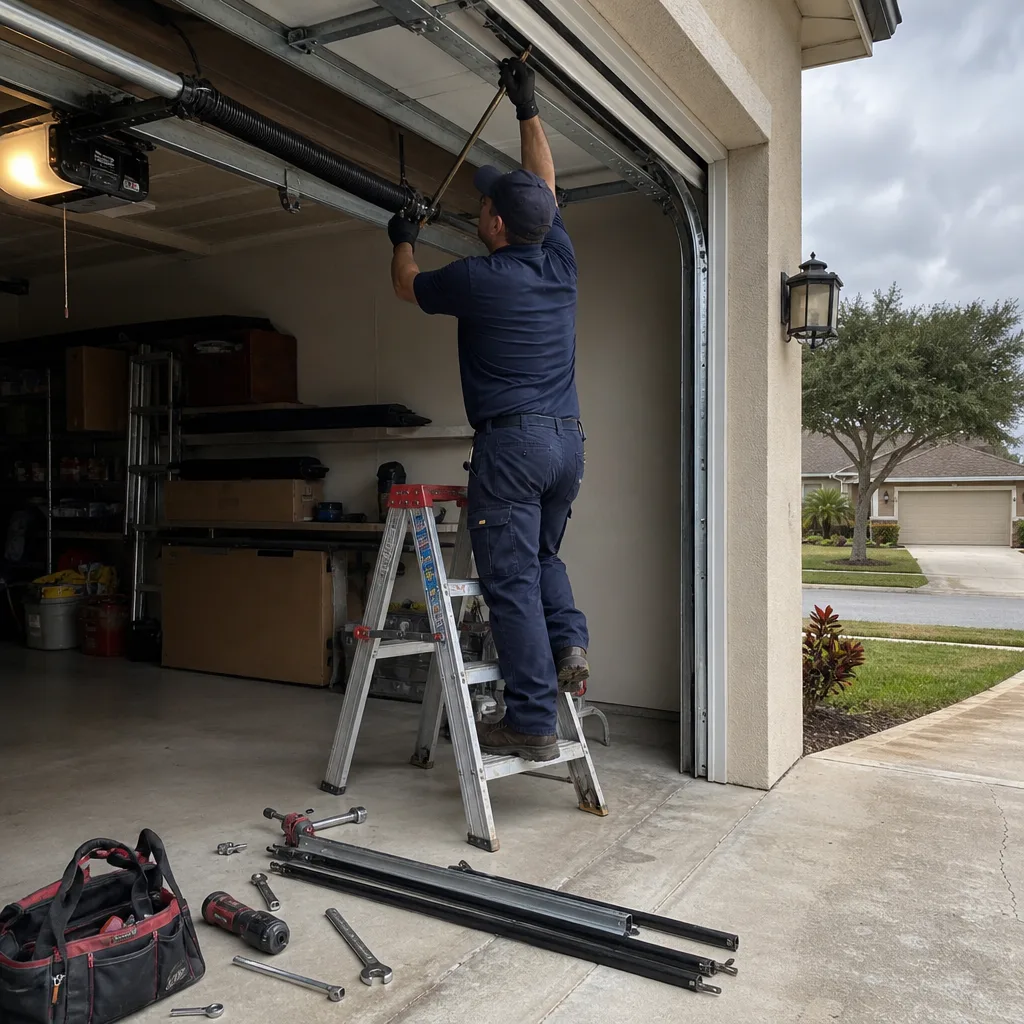
Last updated November 22, 2026
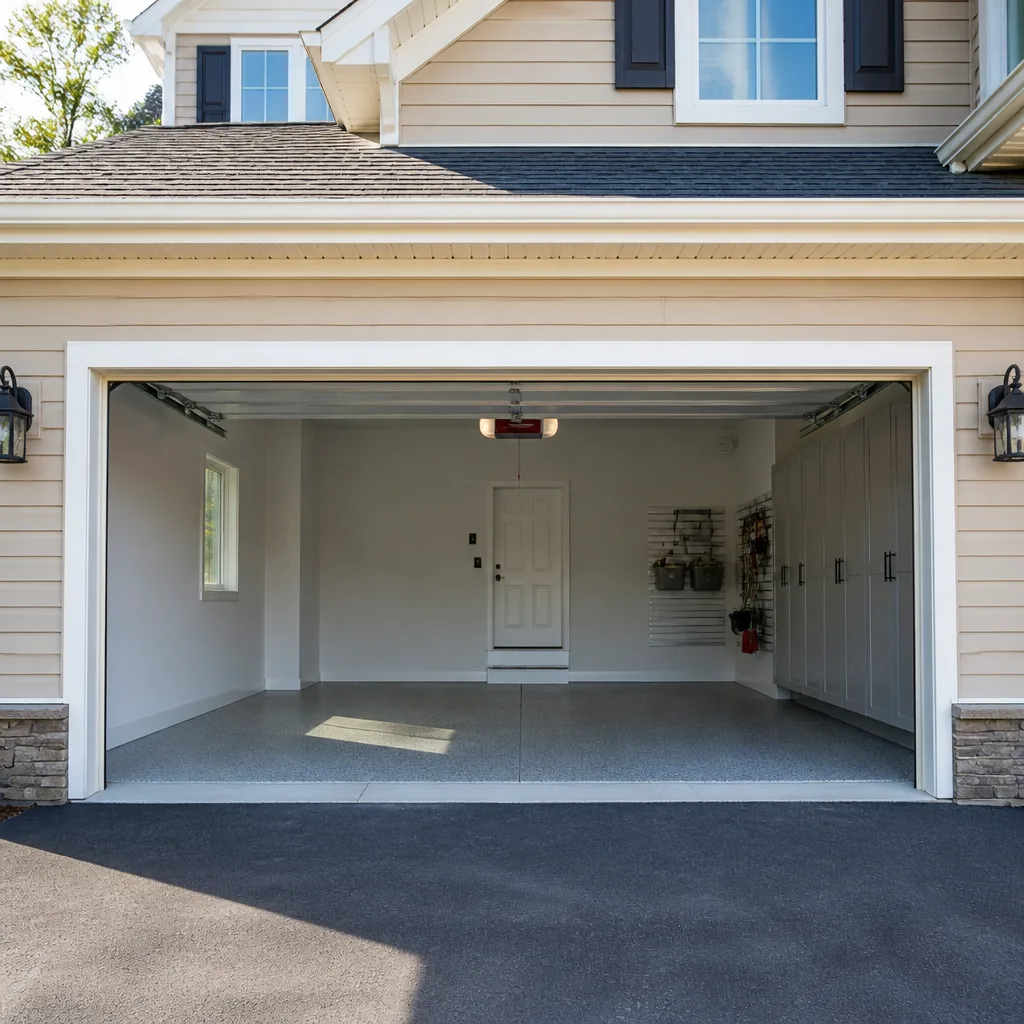
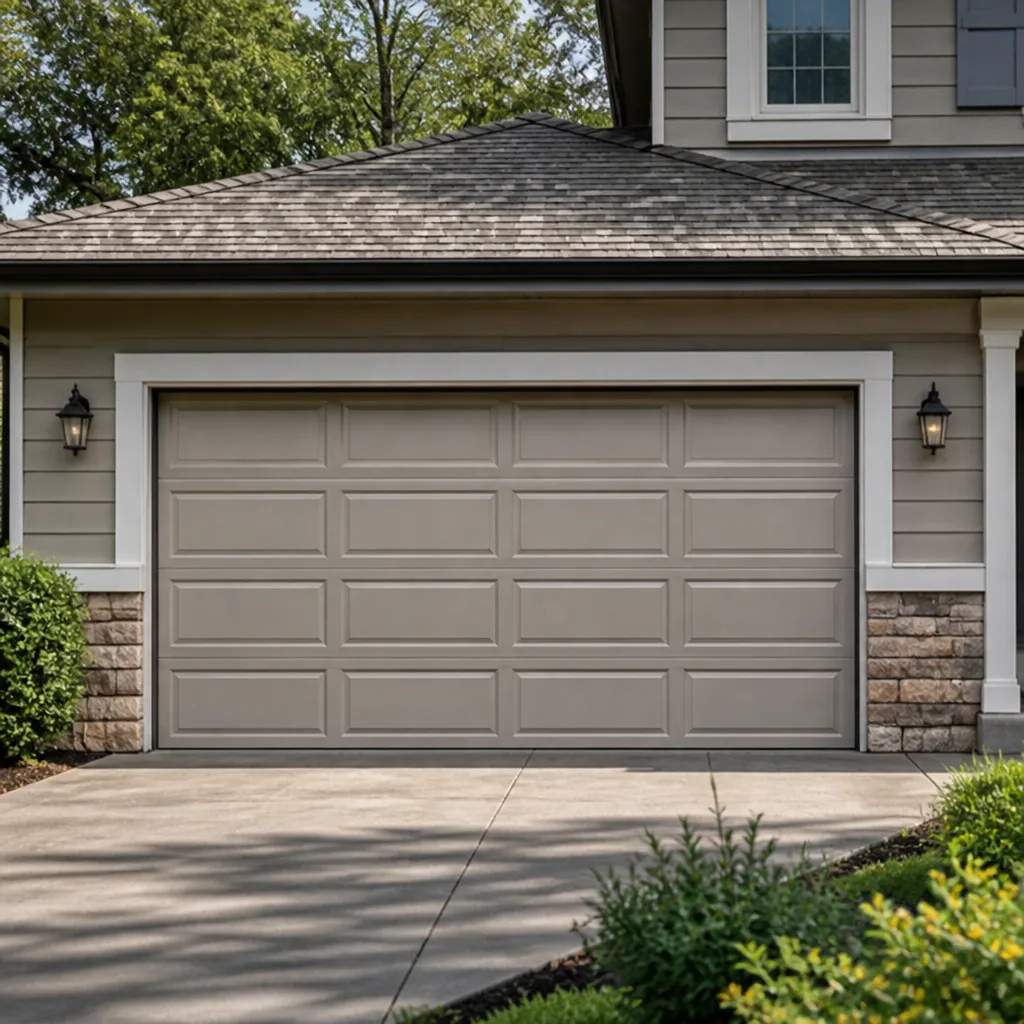 Raised-panel steel
 Carriage house
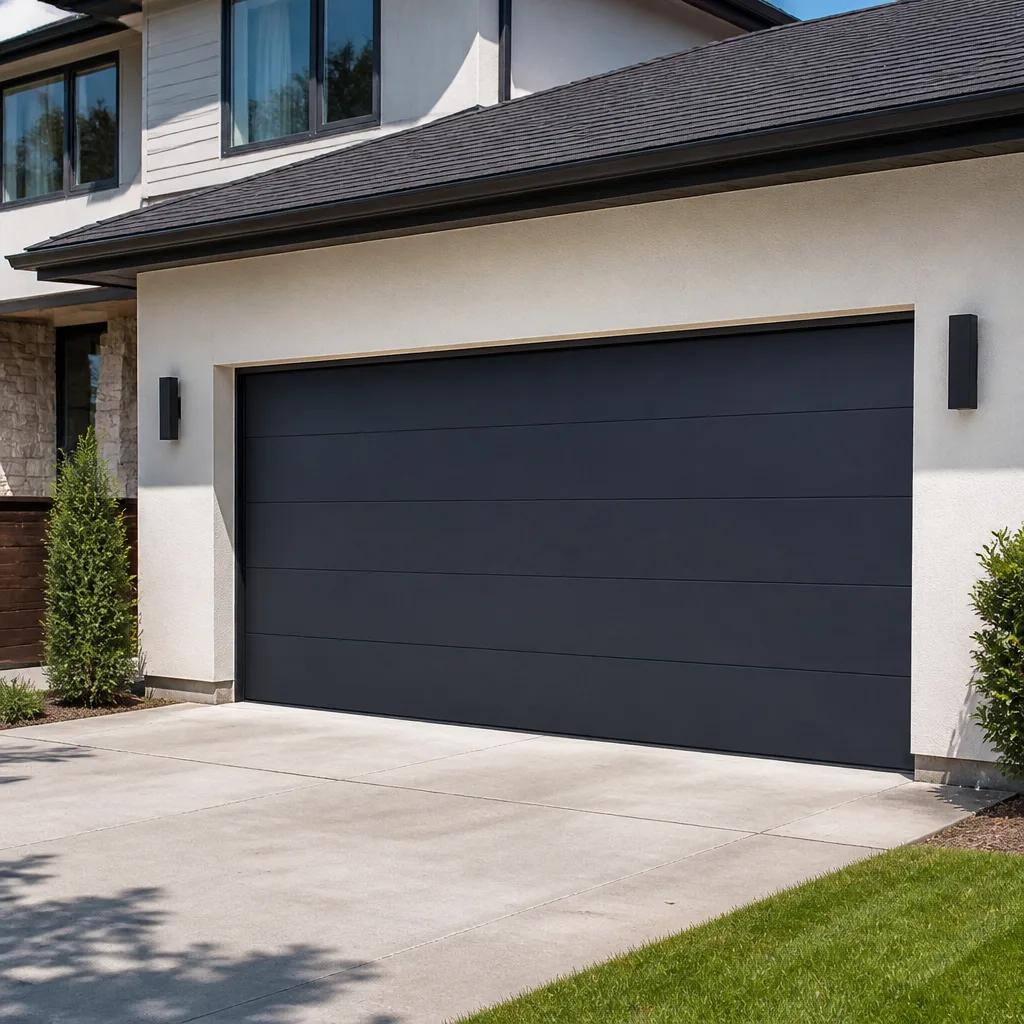 Modern flush
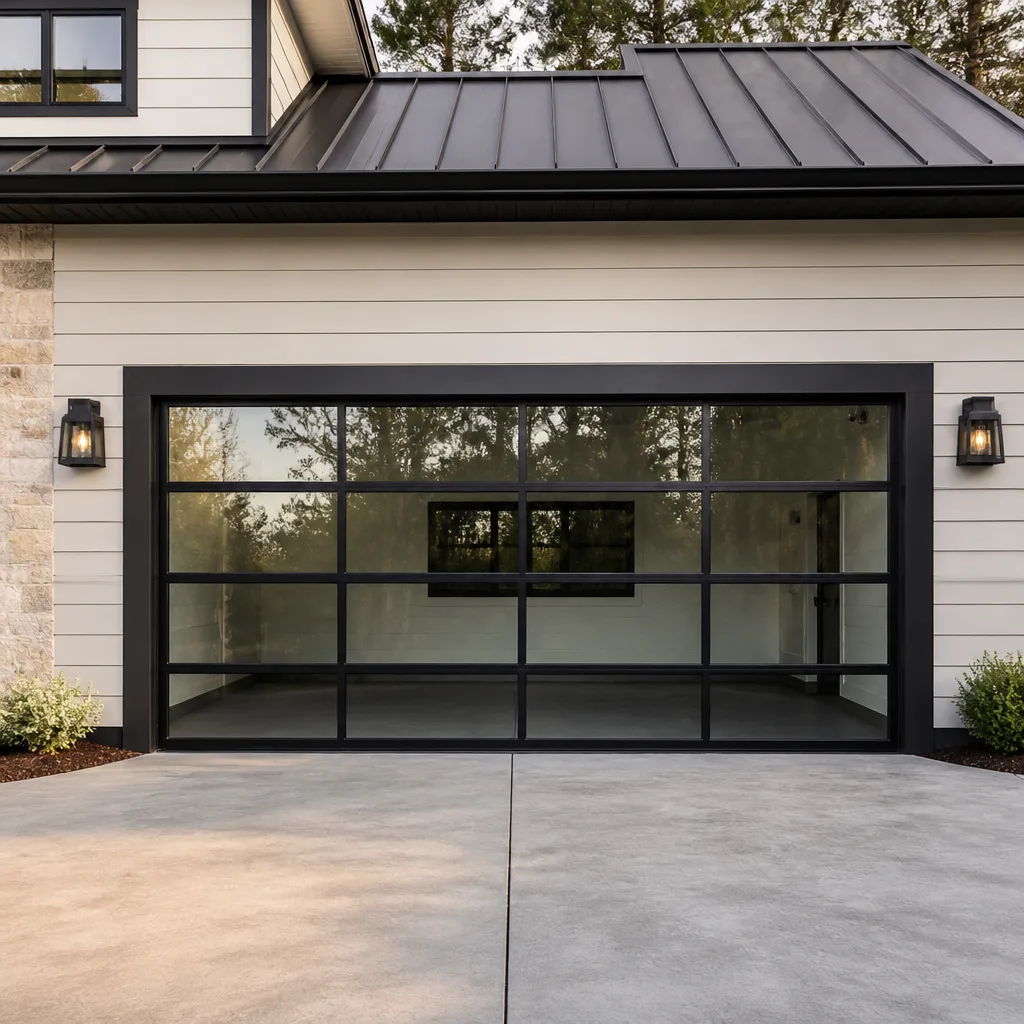 Full-view glass
 LiftMaster openers
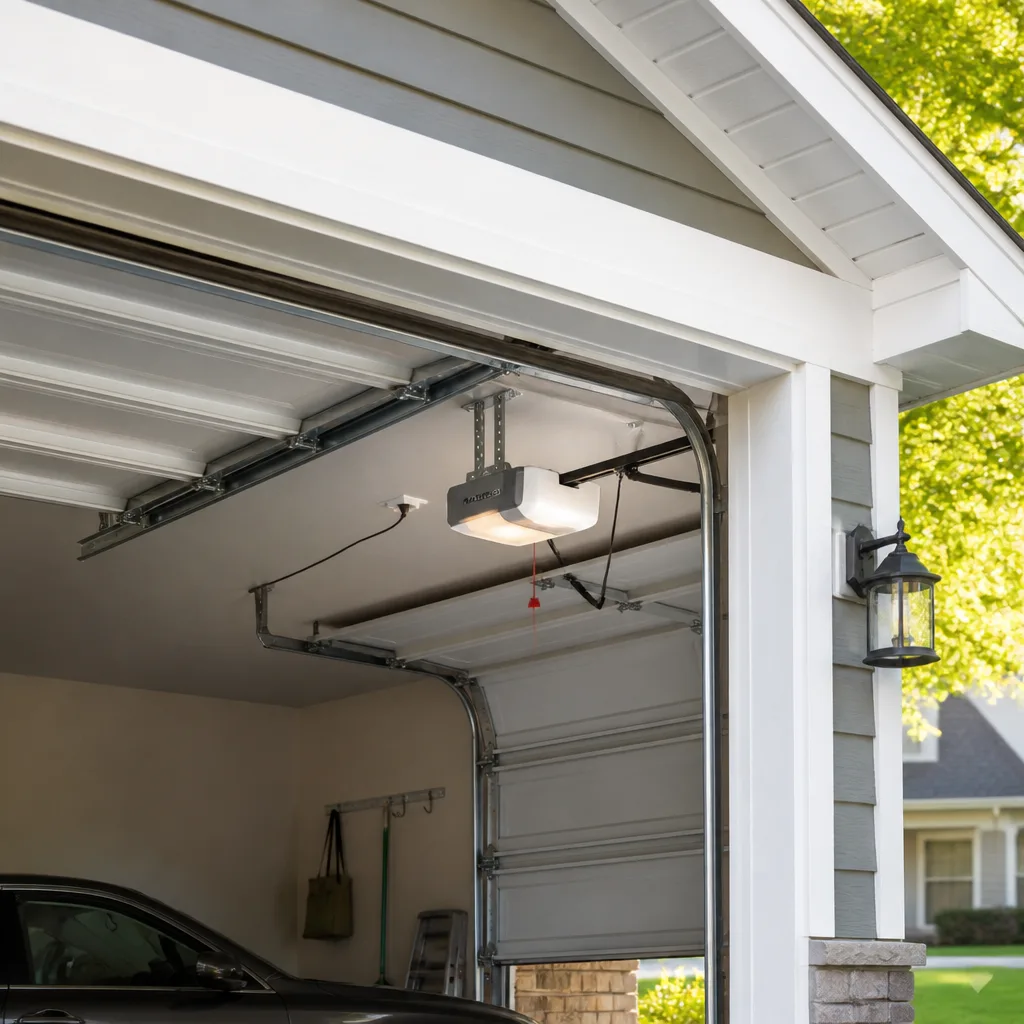 Chamberlain openers
Full 25-point door and opener safety check with every visit - springs, cables, rollers, tracks, and your LiftMaster or Chamberlain opener included
You get a price before we start. It does not change when the pro arrives.
Get your free estimateSeasonal Garage Door Care for Plant City: Year-Round Homeowner’s Guide
Winterizing advice built for snowmelt and fall leaf piles doesn’t help anyone in Plant City. We don’t have four seasons here. We have a wet season, a dry season, a hurricane prep window, and a short cold snap that surprises people every January. The maintenance calendar that keeps a garage door running in Florida looks nothing like the one you’ll find online. What matters is what you seal in May before the humidity spikes, what you check in June before the first named storm, what you inspect in October after months of daily thunderstorms, and what you leave alone until the dry months. This guide walks through all four phases, what to check in each, and when a problem belongs in the hands of a specialist.
Quick Answer
Seasonal garage door care in Plant City follows four phases: a pre-wet season inspection in May (seals, cables, opener battery backup), a hurricane prep check in June (wind rating, manual release, bracing), a post-storm inspection after any named system passes through, and dry-season maintenance from November through April when humidity drops enough to make spring replacement, painting, and opener upgrades easier to schedule and easier on the door. The occasional January cold snap is the fourth wildcard – springs get brittle below 40°F and snap disproportionately during those short cold mornings.
Styles & brands we work with
- Raised-panel steel
- Carriage house
- Modern flush
- Full-view glass
- LiftMaster openers
- Chamberlain openers
Table of Contents
- Why Plant City Needs a Florida-Specific Garage Door Calendar
- May: The Pre-Wet Season Checklist
- June: Hurricane Prep Protocol
- After the Storm: What to Inspect and What to Stop Using
- November Through April: The Dry Season Opportunity Window
- The January Cold Snap and Your Springs
- What Humidity Does to Tracks, Rollers, and Panels
- The Monthly Five-Minute Check
Why Plant City Needs a Florida-Specific Garage Door Calendar
Most seasonal garage door advice is written for places with hard freezes. It tells you to clear snow from the bottom seal, watch for ice in the track, and prepare for the freeze-thaw cycle that loosens hardware. None of that applies here. Plant City sits inland in Hillsborough County, and the two forces that actually wear a garage door down are humidity and storm-driven wind and rain.
Humidity is the slow one. It works on steel cables, hinges, rollers, and the bottom weather seal every day from roughly May through October. Storm season is the fast one. Wind-driven rain hits the door face at an angle, water finds its way into the track and the panel seams, and the opener gets a workout in a single afternoon that would normally take a month. The dry months from November through April are when the door gets a break and when scheduled work makes the most sense.
That gives us four distinct maintenance windows rather than the conventional spring-and-fall routine. Each one has its own checklist. Here’s what we’ve learned from working on doors across Plant City – from older homes near downtown to newer construction out toward the county line. A door that’s inspected on this Florida schedule needs fewer emergency calls than one that gets attention only when something breaks.
If you’re already dealing with a problem and you need it handled now, Plant City Garage Door Repair Pros covers that. The rest of this guide is about preventing the call in the first place.
May: The Pre-Wet Season Checklist
May is the last quiet month before the afternoon storms become a daily habit. Whatever you skip now gets stress-tested by rain and wind through the wet season. This is the single most important maintenance window on the Plant City calendar, and it’s the one most homeowners miss because the weather still feels pleasant.
Work through these in order:
- Inspect the bottom weather seal. Run your hand along the bottom of the door with it closed. Any gap that lets daylight through will let water and insects in. A worn seal is inexpensive to replace and prevents water from reaching the panel bottom edge, which is where rust starts.
- Check the cables for corrosion. Look at the steel cables running down each side of the door. Surface rust is normal in Florida humidity. Fraying, broken strands, or a cable that looks like it’s separating are not – stop using the door and call a professional. Cables are under extreme tension and are dangerous to handle.
- Test the opener’s battery backup. Many openers sold in recent years include a battery backup designed for power outages. Storm season means outages. Unplug the opener from the wall or trip the breaker, then press the remote. If the door doesn’t move, the battery is dead or missing, and it’s worth replacing before June.
- Lubricate the moving parts. Rollers, hinges, and the torsion spring coils get a light application of garage door lubricant. Not WD-40, which is a solvent, and not grease, which collects grit. A proper lubricant keeps things quiet through the wet months.
- Tighten the hardware. Vibration loosens bolts over time. Go around the door and track with a socket wrench and snug everything. Don’t overtighten; you’re removing play, not crushing the hardware.
- Test the safety reverse. Place a roll of paper towels under the door and close it. The door should reverse on contact. If it doesn’t, the opener’s force settings need adjusting – this is a safety function, not a convenience.
- Clear the track and the floor. Debris in the track is a common cause of a door that jumps or binds. Wipe the track channels clean and make sure nothing is stored against the door on the inside.
This list takes about an hour. Done in May, it heads off the majority of the failures we see during the wet season, when a small gap in a seal turns into a water-damaged panel and a slightly loose cable turns into a snapped one.
June: Hurricane Prep Protocol
June is when the first named storms become possible and when every Plant City homeowner should know exactly how their garage door behaves under wind load. The garage door is the largest opening in most homes, and it’s often the weakest point in the building envelope during a storm.
Know your door’s wind rating
Garage doors are rated for wind pressure, and the rating matters most in hurricane territory. If you don’t know what your door is rated for, look for a label on the door or in the owner’s documentation. A door rated for a lower wind pressure than your area’s requirements is a real gap in your storm protection. If you’re replacing a door in Plant City, choose one rated appropriately for the wind zone your home sits in, and confirm the rating with the manufacturer’s documentation. Ask your local building department what the current requirement is for your address.
Learn the manual release – and don’t practice it in a storm
Every opener has a manual release: usually a red cord hanging from the carriage. Pulling it disconnects the door from the opener so you can raise it by hand. Know where it is before you need it. If power goes out during a storm and your opener has no working battery backup, the manual release is how you get the car out. The one caveat: never pull the release while the door is open. The door can come down uncontrolled. Pull it only with the door closed.
Bracing, and when to install it
A brace kit adds horizontal or vertical reinforcement to the door’s panels and helps the door resist wind pressure. If you’re fitting one, do it well before storm season, not the day before a system arrives. Bracing changes how the door carries load, so it needs to be matched to the door’s construction and installed correctly. If you’re not sure what your door needs, that’s a conversation to have with a specialist in May or early June – not while a storm is bearing down.
The pre-storm check
When a storm is forecast, close and lock the door, confirm nothing is stored against it inside, and take in anything outside that wind could throw against the panels. Clear the track of debris. Once the storm arrives, leave the door closed and the opener disengaged if the power is out.
After the Storm: What to Inspect and What to Stop Using
After a near-miss or a direct hit, the door may still open and close. That doesn’t mean it’s fine. Wind pressure can bend a track, twist a panel, or leave a hinge out of alignment in ways that aren’t obvious from the ground, and a bent track is a safety hazard even when the door still moves.
Here’s what to check once it’s safe to go outside:
- Look down the track from the floor. Stand at the base of the door and sight along each vertical track. It should be straight. Any bow, kink, or dent means the door is running out of alignment.
- Check the panels for dents and separation. A bent panel can bind against its neighbor. Look along each horizontal seam for gaps that weren’t there before.
- Test the balance with the door disconnected. Pull the manual release with the door fully closed, then lift it about halfway by hand. It should stay roughly where you put it. If it drops or rises on its own, the springs or cables are compromised.
- Inspect the cables again. Storm vibration can fray a cable that was fine before. Look for broken strands and any cable that’s jumped its drum.
- Check the bottom seal for water intrusion. If water got inside, dry the panel bottom edges and the track to prevent rust from setting in.
If the track is bent, stop using the door and call a professional. A door that runs on a bent track can come off the track entirely, and that’s a serious injury risk. The same goes for a door that won’t stay up on its own after a storm – that points to a spring or cable failure, and those are the parts you should never touch yourself. Our garage door repair service handles post-storm assessment and track and panel repair. If you’re unsure whether what you’re looking at is cosmetic or structural, have it checked.
November Through April: The Dry Season Opportunity Window
The dry months are the best time of year to schedule the work that doesn’t need to happen immediately. Humidity is low, the storm threat is gone, and the door isn’t fighting daily rain. If you’ve been putting off a spring replacement, a panel repaint, or an opener upgrade, this is the window.
Spring replacement
Springs wear out on a cycle, not a calendar, but if your door is getting harder to lift or the opener is straining, the dry season is the sensible time to replace them. A torsion spring is under enormous tension, and replacing one is one of the most dangerous jobs in the trade. General handymen often decline it, and some who take it on get it wrong, which is worse. Our garage door spring repair is a named specialty for exactly this reason. Springs are replaced as a matched pair more often than not, since a pair wears at the same rate and replacing one leaves the other near the end of its life.
How much does it cost? Spring repair in the Plant City area typically runs in a modest range per spring, and a matched pair costs roughly twice a single spring. The written estimate sets the final price, and we quote and agree it before any work starts. Estimates are free.
Panel painting and cosmetic work
Paint adheres and cures better in lower humidity. If your door’s finish is chalky or faded, the dry season gives you a longer working window before afternoon storms return. Prep matters more than the paint: clean the panels thoroughly, address any rust spots first, and choose a product suited to the door’s material. For a steel door, a rust-inhibiting primer on any bare spots before topcoat makes the difference between a finish that lasts and one that blisters by June.
Opener upgrades
An opener upgrade in the dry season means you’re not doing it in a rush before storm season, and you have time to choose a unit with the features that matter here: battery backup, quiet operation if the garage is under a bedroom, and smartphone control so you can check the door from work. We’re factory-familiar with the major brands, so if you already own a LiftMaster, Chamberlain, Genie, or Craftsman opener, we work on the brand you have rather than pushing you toward a replacement you don’t need.
The January Cold Snap and Your Springs
Plant City gets cold snaps. They’re brief and they’re rare, but when the temperature drops below 40°F for a few hours, garage door springs get brittle. Steel that’s been cycling for years at Florida ambient temperatures loses some elasticity in the cold, and a spring that was already near the end of its life can snap on the first cold morning. That’s why January produces a disproportionate share of the spring failures we see – not because January is cold by national standards, but because the door and its springs have spent the rest of the year at 80-plus degrees.
What to do when a cold snap is forecast:
- Listen for a change in sound. A door that suddenly sounds louder or more labored in cold weather is telling you something. Note it and have it checked.
- Don’t force a stiff door. If the door is hard to lift by hand during a cold snap, stop. The opener forcing it can do more damage than the cold did.
- Check the spring’s appearance. A visible gap in a torsion spring, or a spring that looks stretched out of shape, means it’s failed. Don’t operate the door. Call a professional.
- Warm the door gently if it’s stiff. If the door is merely stiff from cold and not broken, letting it warm up naturally before you use it does no harm. There’s no need to force it open at 6am on the coldest morning of the year.
The cold snap is also the one time the dry-season argument flips. If your springs are near the end of their life, replacing them in November or December – before the January cold – is smarter than waiting for a snap to finish them off. Spring repair done right, done safely is worth scheduling ahead of the cold rather than reacting to it.
What Humidity Does to Tracks, Rollers, and Panels
Humidity is the quiet problem in Plant City. It doesn’t break a door the way a storm does, but it wears one down year after year. Understanding where it does damage tells you where to look.
Steel cables are the most vulnerable part. They’re under tension and exposed, and surface rust turns into pitting, which turns into a weakened cable. That’s why the May cable check matters so much: catching rust early is far cheaper than catching a snapped cable.
Hinges and rollers seize up in humid air. A roller that doesn’t spin freely drags along the track, which wears the track and strains the opener. Monthly lubrication is the fix, and it’s a five-minute job.
Panel bottom edges collect water and rust first, because that’s where water settles after it gets past the seal. The bottom seal is the first line of defense, and replacing it when it’s worn is one of the cheapest preventive steps there is.
Tracks pick up grit and moisture. A clean, dry track runs smoother and lasts longer. Wiping them down once a month during the wet season keeps things moving freely.
If you’re seeing rust that’s more than surface level, or a door that’s getting harder to operate season after season, garage door opener repair and a full door inspection can tell you whether the opener is the problem or the door itself is binding. Often it’s the door, and the opener is just the thing that finally gives out from fighting it.
The Monthly Five-Minute Check
Beyond the seasonal phases, a five-minute check once a month catches small problems before they become emergency calls. Here’s the routine:
- Open and close the door and listen. Any new grinding, squeaking, or popping is a signal. A door that sounds the same every time is a healthy door.
- Look at the springs. A gap, a stretch, or a spring that looks different from last month warrants a call.
- Check the cables for fraying. Look for broken strands or a cable that’s jumped its drum.
- Test the safety reverse. The paper-towel test takes thirty seconds and confirms a safety feature that matters.
- Wipe the track and lubricate the moving parts. A quick pass with a dry cloth and a light application of lubricant keeps humidity from winning.
Five minutes a month, plus the seasonal checklists, is the whole system. It’s not complicated. It’s just specific to this climate.
Common Mistakes to Avoid
- Applying winter advice to a Florida door. Snow and ice prep does nothing here. Spending your maintenance time on the wrong problems means the humidity and storm issues go unaddressed.
- Ignoring the bottom seal because the door still closes. A worn seal lets water into the panel bottom edge, and rust there spreads. By the time it’s visible, the damage is already done.
- Using the wrong lubricant. WD-40 is a solvent, not a lubricant. Grease collects grit. Use a product made for garage door hardware.
- Trying to replace a spring yourself. Torsion springs are under extreme tension, and a mistake can cause serious injury. This is the one job on the list that should always go to a trained specialist.
- Running a door on a bent track after a storm. A door that still moves on a bent track is a door that can come off the track. Stop using it and have it checked.
- Waiting for the January cold snap to replace worn springs. If the springs are near the end of their life, dry-season replacement is the safer bet. Cold makes the failure more likely, not less.
- Skipping the opener battery backup test. A backup battery that’s dead is no backup at all. Test it in May, before the outages arrive.
See the difference
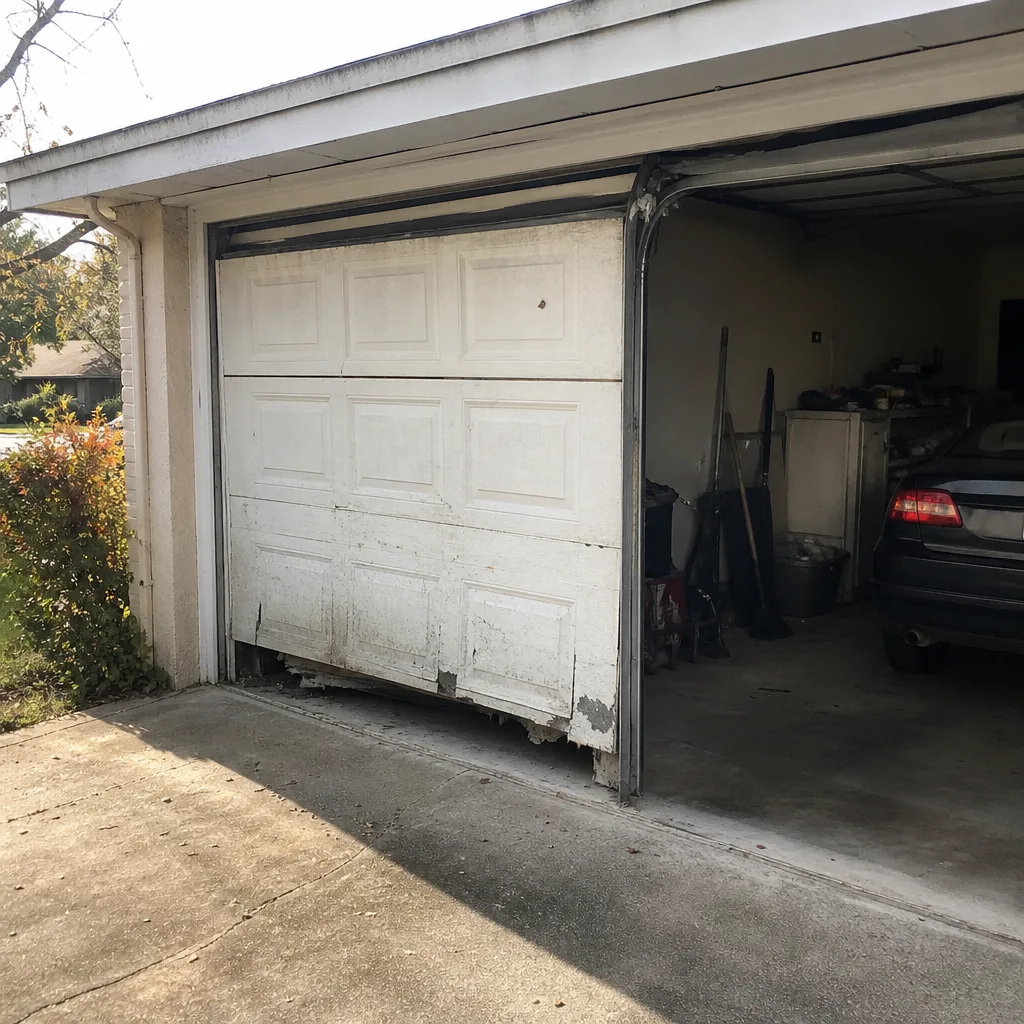 Before
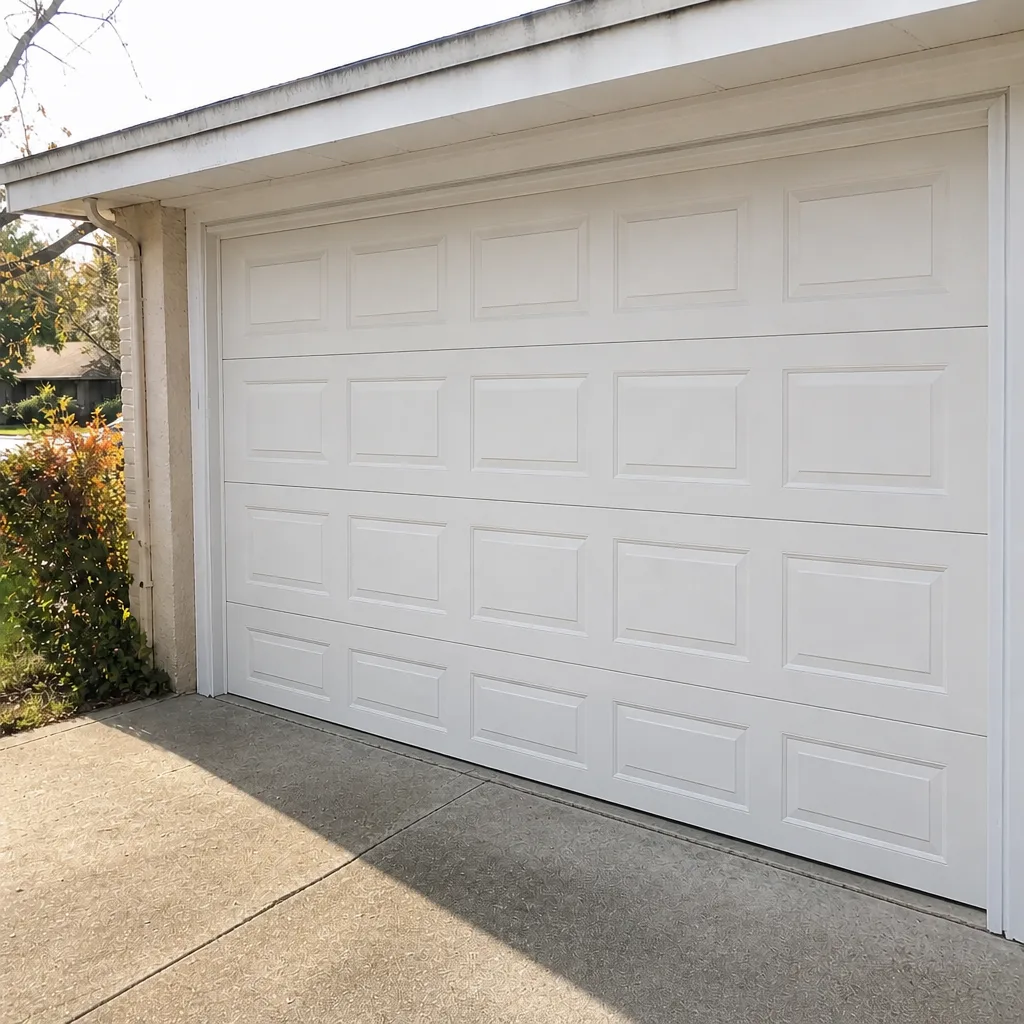 After
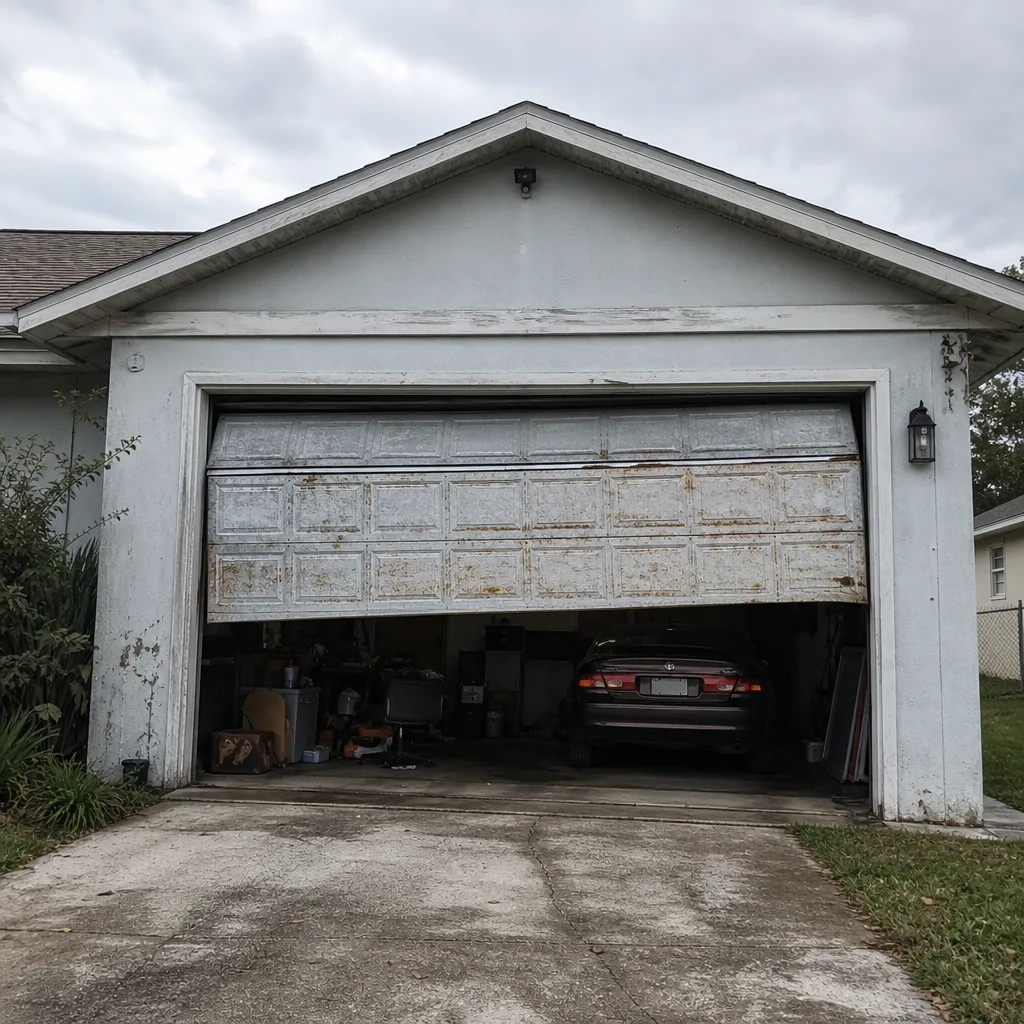 Before
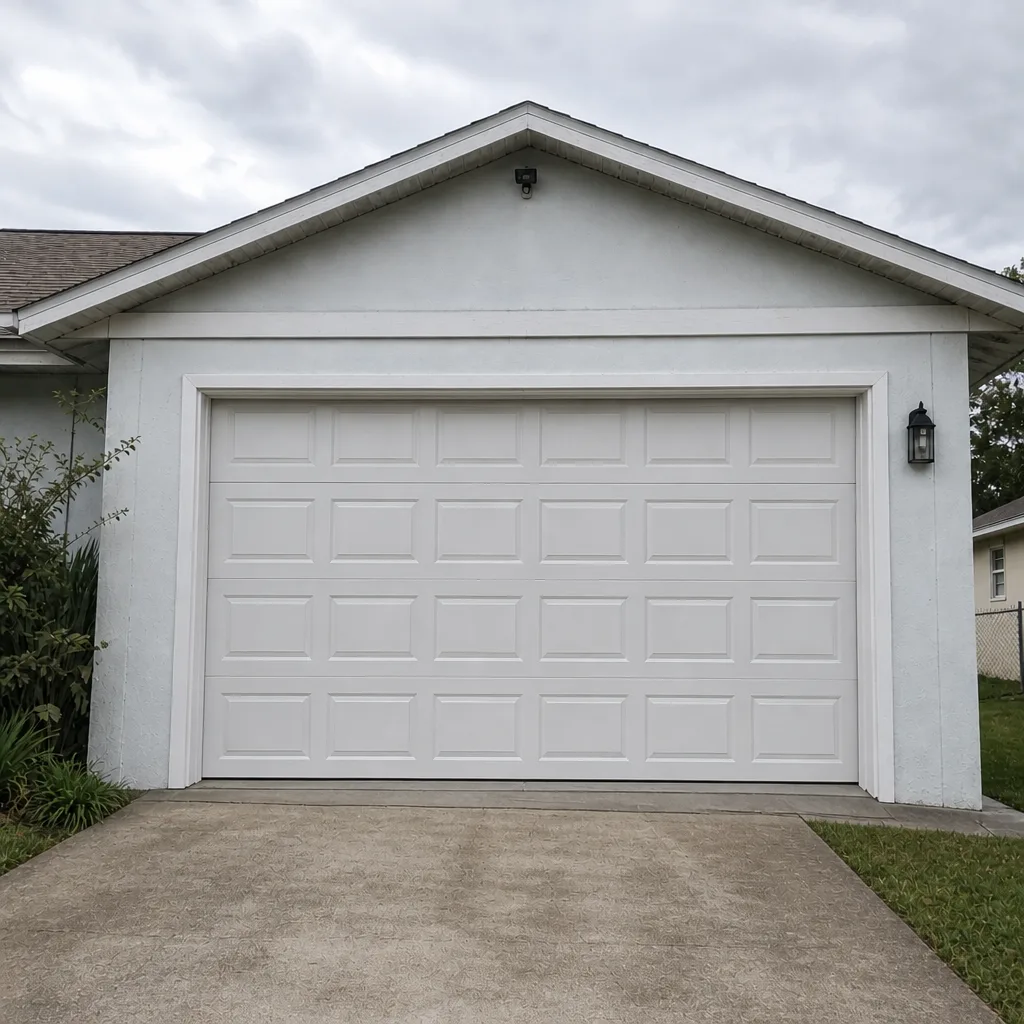 After
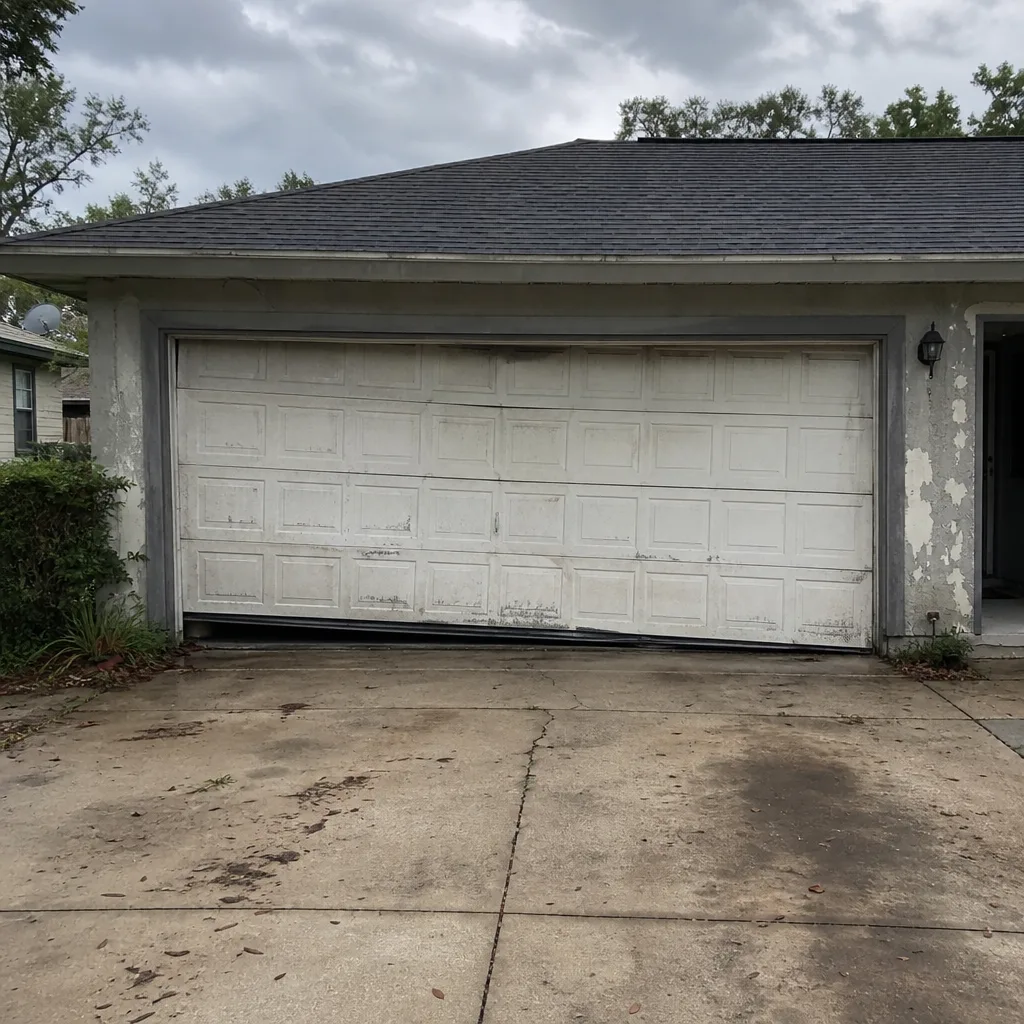 Before
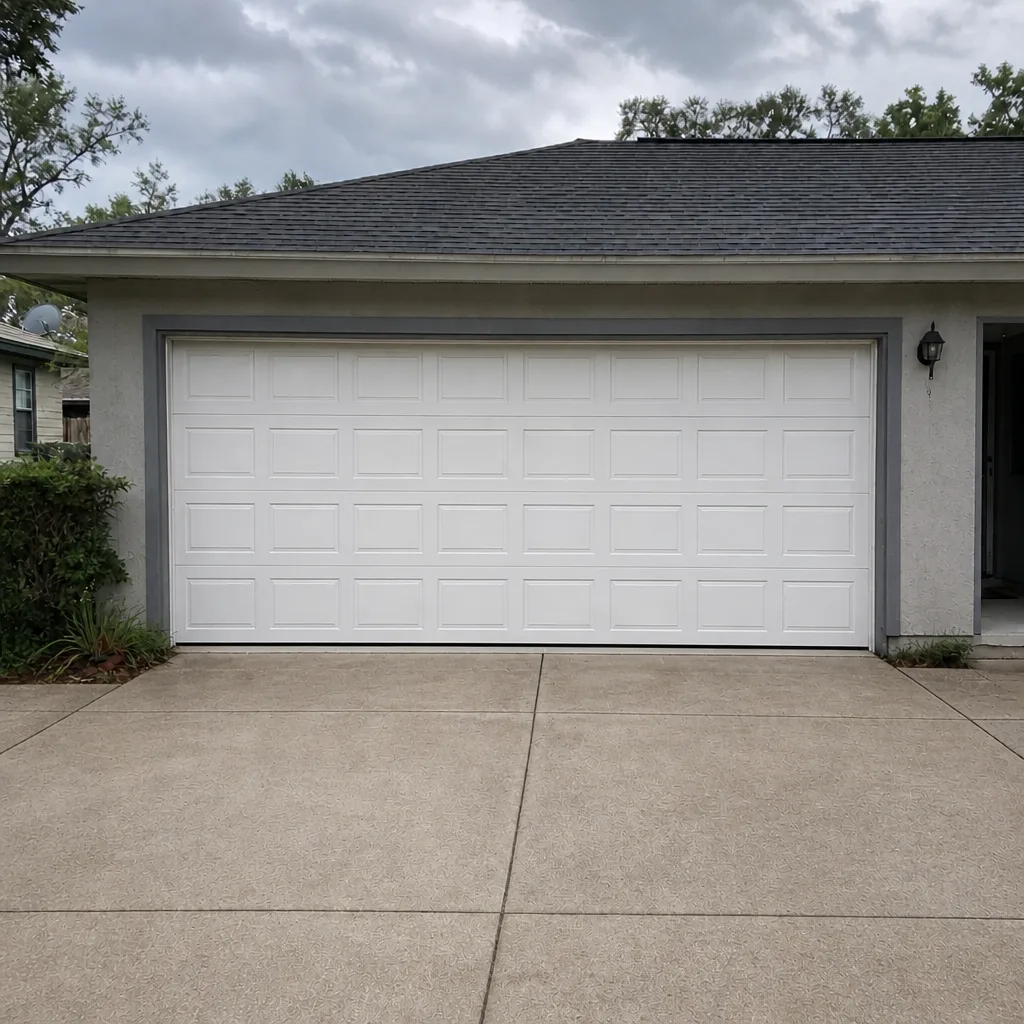 After
When to Call a Professional
Some jobs are homeowner work: lubrication, seal replacement, tightening hardware, testing the safety reverse. Some jobs need a specialist. Call a professional if you see a broken or stretched spring, a frayed or snapped cable, a door that won’t stay up on its own, a bent track, a door that’s come off its track, or a panel that’s separated. Call if the opener runs but the door doesn’t move, if the door reverses for no reason, or if you’ve had a storm and you’re not sure whether the damage is cosmetic or structural. And call if the door is getting harder to operate season after season – that’s usually a sign that something is wearing out, and the earlier it’s caught, the simpler the fix. Plant City Garage Door Repair Pros offers free estimates in Plant City – call (866) 329-6292. We answer 24/7. Fast dispatch from 7am to 7pm, Sunday through Friday.
Frequently Asked Questions
Once a year for a full professional service, plus the seasonal checks in this guide. In a Florida climate, the yearly service should happen in the dry season, ideally in the fall, so the door is in good shape before the wet season starts. The monthly five-minute check plus the May and June prep lists cover the rest.
Cold makes steel brittle, and Plant City’s springs spend most of the year at warm ambient temperatures. When the temperature drops below 40°F during a January cold snap, a spring that was already near the end of its life is much more likely to snap. It’s not that January is cold by national standards; it’s the sudden change from a warm baseline. Call (866) 329-6292 for an exact quote if a spring has failed – estimates are free.
You need a door rated appropriately for the wind zone your home is in, which depends on your address and the current building requirements. Ask your local building department what applies to your home, and confirm the door’s rating from the manufacturer’s documentation. If you’re replacing a door, this is the single most important specification to get right.
No. Torsion and extension springs are under extreme tension, and releasing that tension incorrectly can cause serious injury or death. Spring replacement is the one maintenance job that should always go to a trained specialist. It’s also one of the most commonly mishandled repairs by general handymen, which is why we treat it as a specialty.
Check the tracks for bends by sighting along them from the floor, look for panel dents and separation, test whether the door stays up on its own when disconnected, and inspect the cables for fraying. If the track is bent or the door won’t stay up, stop using it and call a professional. A door moving on a bent track can come off the track entirely.
Check the opener unit for a battery compartment, then test it by cutting power and pressing the remote. If the door doesn’t move, the battery is dead or missing. Most openers sold in recent years have a backup option, and it’s worth confirming before storm season. If your opener needs repair, call (866) 329-6292.
Often, yes. Emergency garage door service is a core part of what we do, not an afterthought. Call and we’ll book the soonest opening. We answer 24/7, and dispatch runs from 7am to 7pm, Sunday through Friday. We’re closed Saturday. A call outside dispatch hours is booked into the next opening.
No. We quote the job, agree the price, and then start work. The written estimate sets the final price, so there’s no surprise on the invoice. Estimates are free, and the quote covers the whole job before anything is touched.
The Bottom Line
Plant City’s garage door calendar has four phases, not four seasons. May is the pre-wet season inspection – seals, cables, battery backup, lubrication. June is hurricane prep – know your wind rating, know your manual release, brace if you need it. After any storm, inspect the track and the springs before you trust the door. November through April is the dry-season window for spring replacement, painting, and opener upgrades. And the January cold snap is the wildcard that catches tired springs. Follow the schedule, do the homeowner-safe checks yourself, and hand the dangerous jobs to a specialist. That’s the whole system. Our technicians have up to 10 years of experience, we’re certified to service eight major brands including Amarr, Wayne Dalton, Craftsman, and Raynor, and one call covers repair, opener, spring, or full installation. Call (866) 329-6292 for a free estimate. We answer 24/7. Fast dispatch from 7am to 7pm, Sunday through Friday.
Written by the team at Plant City Garage Door Repair Pros.