
Last updated November 22, 2026
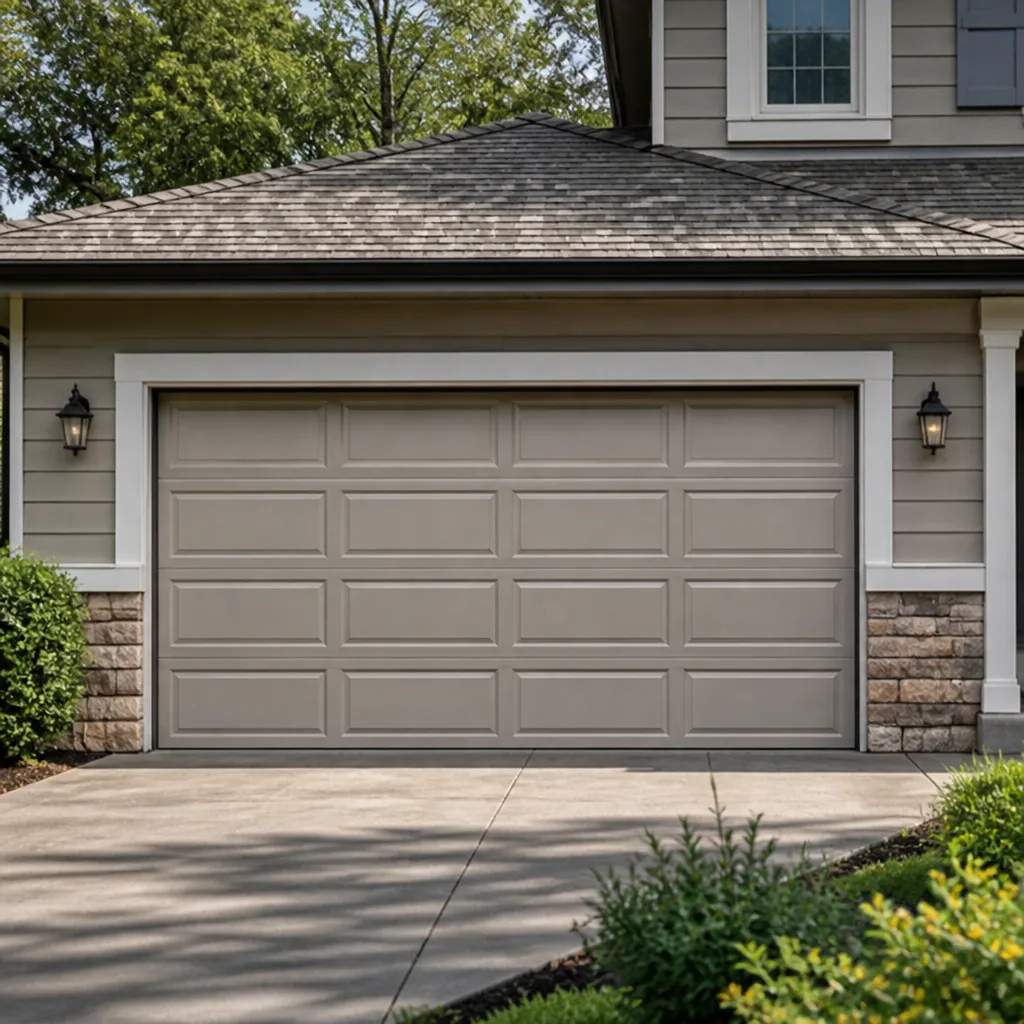 Raised-panel steel
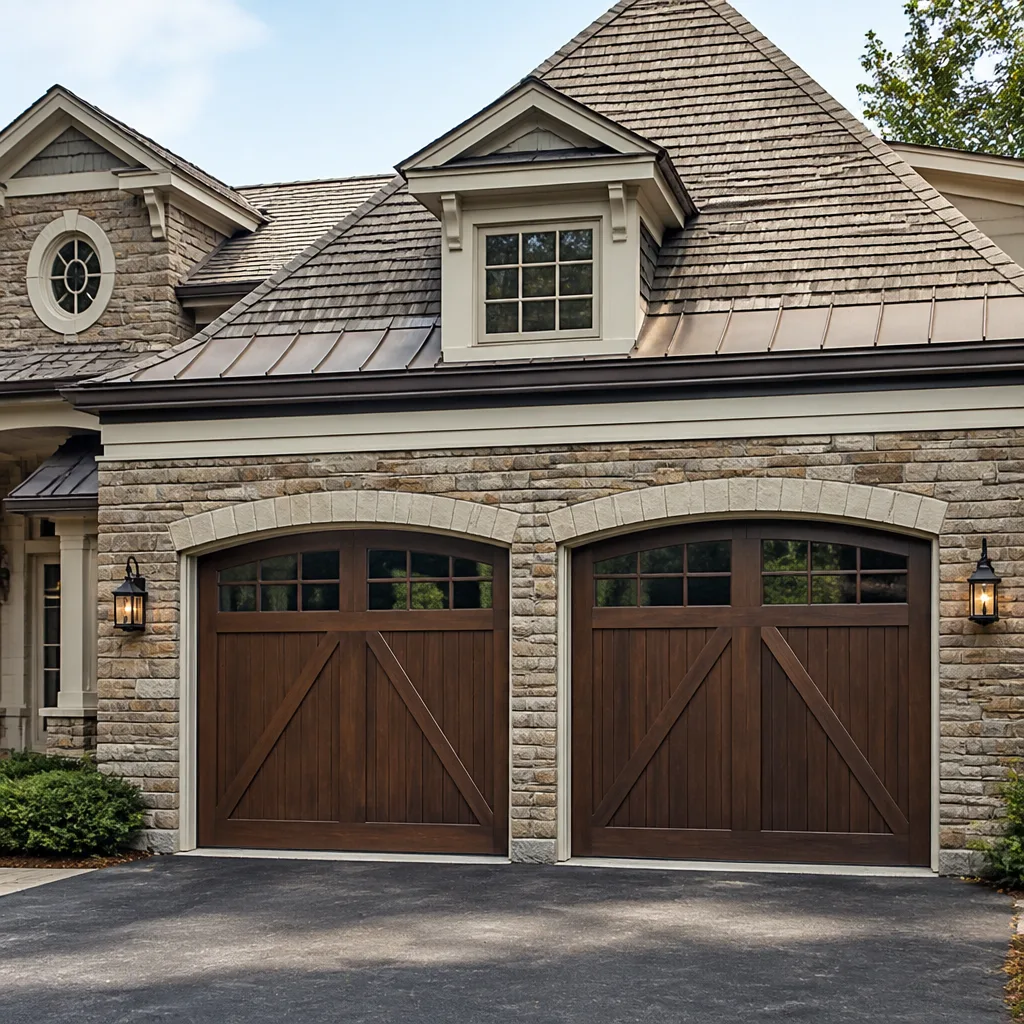 Carriage house
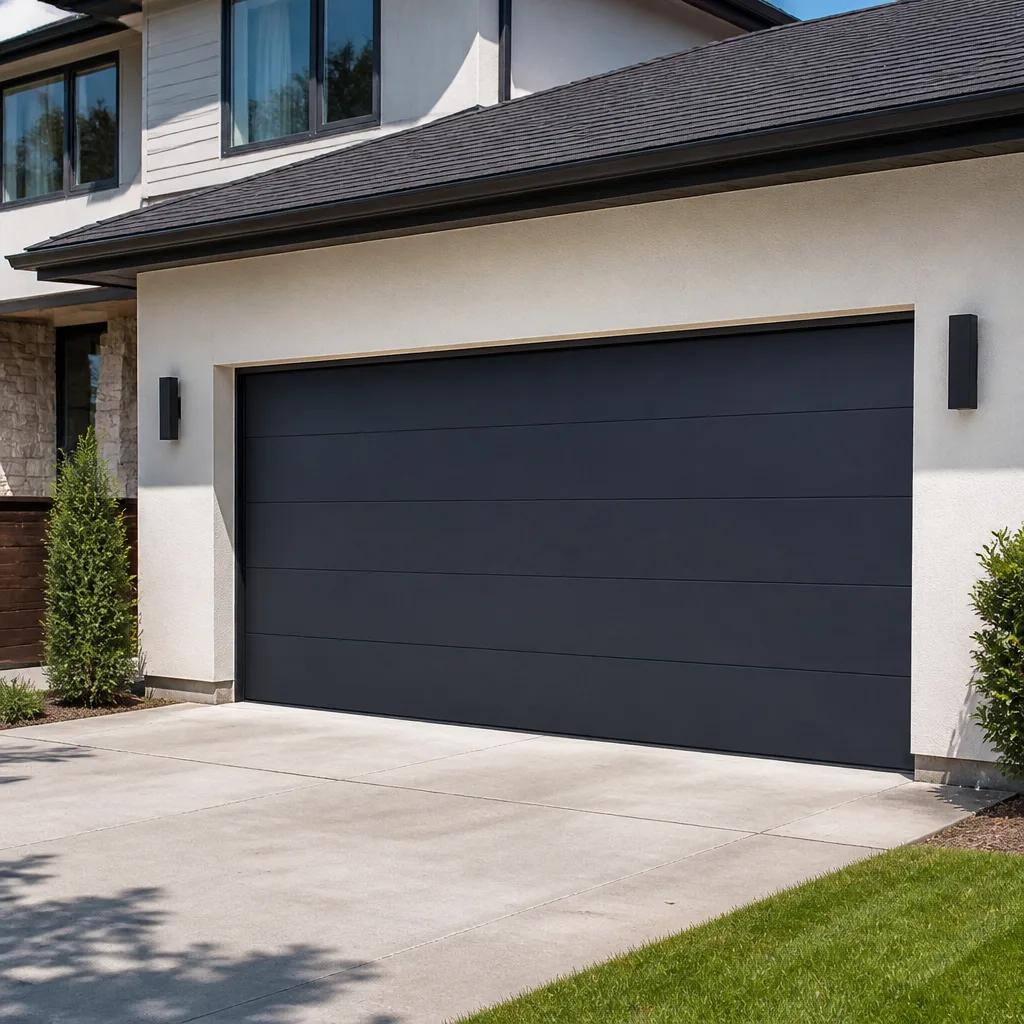 Modern flush
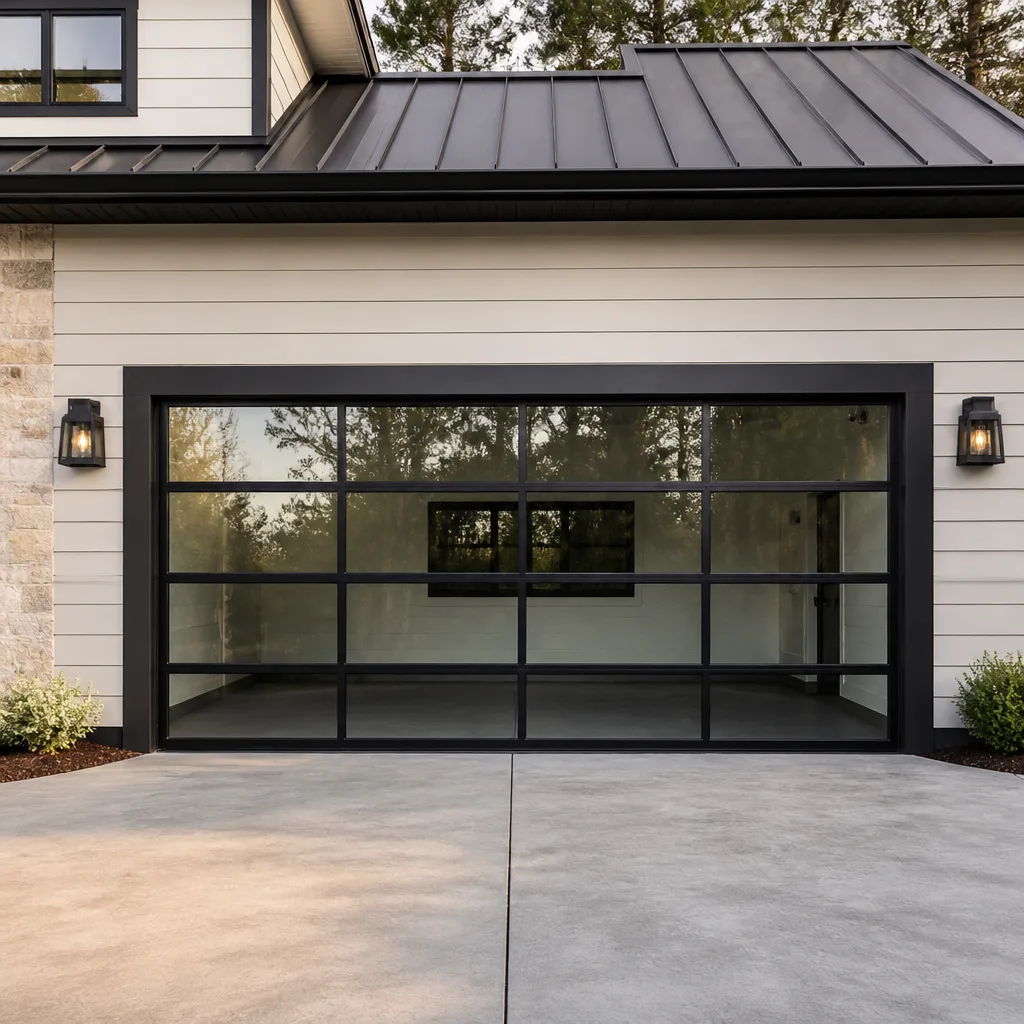 Full-view glass
 LiftMaster openers
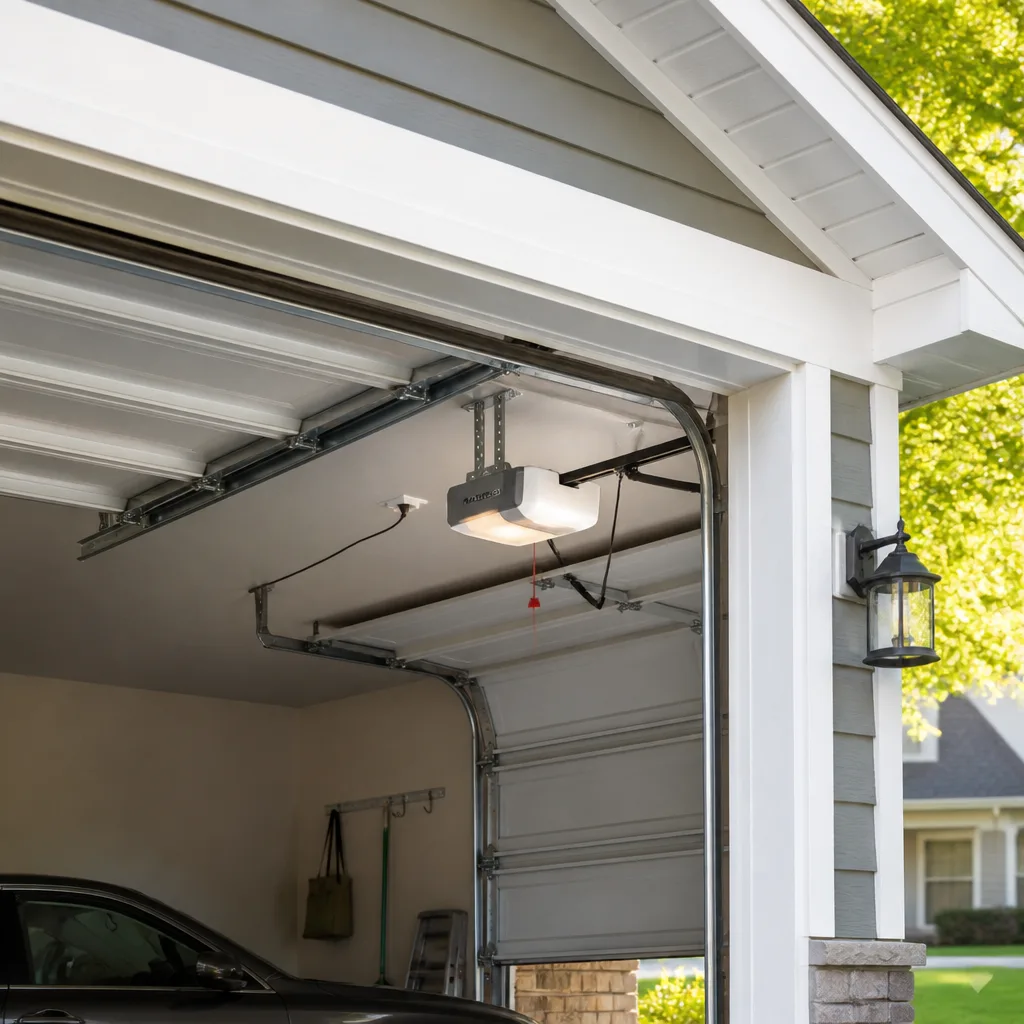 Chamberlain openers
Full 25-point door and opener safety check with every visit - springs, cables, rollers, tracks, and your LiftMaster or Chamberlain opener included
You get a price before we start. It does not change when the pro arrives.
Get your free estimateGarage Door Permits, Codes & Inspections in Plant City, FL: What You Need to Know
Most homeowners assume a garage door is like a light fixture: swap it out, nobody cares. That assumption costs people real money at closing. Replacing a garage door in Plant City without pulling a permit doesn’t just risk a stop-work order from Hillsborough County – it creates an unpermitted improvement that your title company will find during your next home sale, often at the worst possible moment, when a buyer is already under contract and their lender starts asking questions. The confusing part is that the line between “repair” and “replacement that needs a permit” is narrower than most people think, and it sits right in the middle of the work people do most often. This guide walks through exactly where that line falls, what Florida wind-load rules mean for a Plant City address, how to check whether your contractor actually pulled the permit they said they did, and what inspectors flag when they come back out.
Quick Answer
Hillsborough County requires a building permit when you replace a garage door or the door assembly, but not for a spring-only or opener-only repair. Full replacement also has to meet Florida Building Code wind-load requirements, and whether your home falls in the High-Velocity Hurricane Zone determines how strict those requirements are. Plant City sits outside the HVHZ, but non-HVHZ doesn’t mean “no rules” – it means a different set of them. Permits are pulled through Hillsborough County, and you can verify any permit in about 90 seconds with the county’s online lookup.
Styles & brands we work with
- Raised-panel steel
- Carriage house
- Modern flush
- Full-view glass
- LiftMaster openers
- Chamberlain openers
Table of Contents
- Does replacing a garage door in Plant City require a permit?
- The gray zone: repairs that sit between permit and no-permit
- Florida Building Code Section 1609 and what wind load means for your door
- HVHZ vs. non-HVHZ: where Plant City actually sits
- How to verify your contractor pulled the permit
- What a failed garage door inspection looks like
- How unpermitted work affects insurance after a storm
- What unpermitted garage door work does at resale
Does replacing a garage door in Plant City require a permit?
Yes. Replacing a garage door in Plant City, Florida requires a building permit through Hillsborough County in most cases, because the door is part of the building envelope and has to meet wind-load requirements under the Florida Building Code. Repairing an existing door – replacing a spring, an opener, rollers, hinges, or a single damaged section – typically does not require a permit because you aren’t changing the rated assembly that’s already on the house.
The distinction matters because the door on your house was permitted and inspected when it went in. It carries a wind-load rating tied to your address, and that rating is only valid if the door and its hardware match what was approved. When you swap the whole assembly, you’re replacing a rated component of the structure. That’s why the county wants to see it, and why the permit isn’t busywork.
What triggers a permit, generally:
- Full replacement of the garage door and its track and hardware
- Changing the door size or the opening itself
- Replacing the door with a different model or wind-rated assembly
- Structural changes to the header, jamb, or framing around the opening
- Any change that alters the wind-load rating of the assembly
What usually doesn’t:
- Replacing one or both torsion or extension springs
- Replacing or reprogramming an opener
- New rollers, hinges, cables, or a bent section
- Adjusting track alignment or travel limits
- Replacing weather seals and bottom rubber
If you’re not sure which side of the line your job falls on, the honest answer is to ask the city or county before you sign anything. We can’t make that call for the building department, but we can tell you what kind of work you’re looking at. Our garage door repair service covers the repair side of this list, and installation is a separate conversation with permits built in.
The gray zone: repairs that sit between permit and no-permit
The permit question gets murky in the middle, and this is where Plant City homeowners get caught. A spring-only repair is clearly not a permit item. A full door replacement clearly is. Between those two, the ground shifts.
Consider these scenarios and how they usually shake out:
- Replacing a single damaged section. If your door has four sections and a car clipped the bottom one, swapping that section is generally a repair. The rated assembly is intact and the door keeps its label. No permit in most cases.
- Replacing two or more sections, or the whole door skin. Once you’ve replaced enough of the door that the original rated assembly is gone, you’re effectively installing a new door. This is where the county tends to want to see it.
- Replacing the door but keeping the track and hardware. A new door panel on old tracks is still a new door assembly in the eyes of the code, and the hardware has to match the new door’s wind rating. Usually a permit item.
- Upgrading to a wind-rated or impact-rated door. Even when the size doesn’t change, changing the rating means changing what’s on the permit record. Permit.
- Replacing a header bracket or wall-mounted hardware. Normally repair-level. But if the bracket is being moved or re-anchored because the old one failed, the inspector’s question becomes whether the assembly still matches its approved design.
- Replacing the opener only. Not a permit item anywhere in Hillsborough County. Openers aren’t part of the wind-load envelope.
In our experience, the confusion hits hardest on older Plant City homes where the original door has been patched and re-patched over the years and nobody’s sure what’s actually rated and what isn’t. When the existing door’s label is gone or unreadable, the only clean path is to treat replacement as a permitted job and do it right. That’s a conversation to have before work starts, not after.
If your door is a Clopay or Amarr model, both manufacturers publish wind-load documentation for their product lines, and your contractor should be able to pull the spec sheet for the exact model going on your house. That documentation is what the permit application and the inspection hinge on.
Florida Building Code Section 1609 and what wind load means for your door
Florida Building Code Section 1609 sets the wind-load requirements for structures in the state, and your garage door is part of that calculation because it’s a large opening in a wall that has to resist wind pressure. A garage door that isn’t rated for the wind load at your specific address is a weak point in the building envelope – not because the door will fly off in a light breeze, but because under design wind pressure it can fail before the rest of the structure does.
Wind load is site-specific. It’s calculated from things like the design wind speed for your area, the exposure category of your property (whether you’re in open ground or sheltered by surrounding structures), and the height of the building. That’s why two houses on the same street can technically need different door ratings if one is more exposed than the other.
What this means practically for a Plant City homeowner:
- Your door carries a wind-load rating, usually expressed as a design pressure number plus a maximum wind speed, printed on a label on the door or its documentation.
- The permit application includes that rating, and the inspection verifies the installed door matches it.
- A door with no label or a mismatched label fails inspection, even if it was installed perfectly.
- You can’t substitute a standard door for a rated one and expect the county to sign off, no matter how the door is braced.
Plant City’s summer storm season is the reason this matters. Afternoon thunderstorms roll through here for months at a stretch, and the occasional stronger system does real work on anything attached to a house. A rated, permitted door is what your insurance policy assumes is on the house. An unrated one is a gap in that assumption, and gaps are where claims get complicated.
If you’re scheduling a replacement and the permit side has you spooked, we can walk through what the process looks like from the contractor’s end. New installation under one roof, documentation included, is how we handle it. For repair work on an existing door, our garage door spring repair page covers the most common job we get called for in Plant City.
HVHZ vs. non-HVHZ: where Plant City actually sits
Florida splits the state into two regulatory worlds for wind protection: the High-Velocity Hurricane Zone (HVHZ) and everywhere else. The HVHZ covers Broward and Miami-Dade counties and is governed by its own stricter product approval system. Plant City is in Hillsborough County, which is not in the HVHZ. That means your garage door falls under the standard Florida Building Code wind requirements, not the HVHZ-specific rules.
Don’t read that as a pass. Non-HVHZ still requires:
- A wind-load calculation for the opening at your address
- A door assembly rated to meet that calculation
- Product approval documentation the county can verify
- A permitted, inspected installation
The practical difference for Plant City comes down to the approval pathway and the specific design pressures required. HVHZ product approvals are a closed system – only products tested and approved for that zone can be used there. Outside the HVHZ, you have a broader range of approved products, but each one still has to match the calculated load at your house.
Where homeowners get tripped up is ordering a door online or through a general contractor who isn’t running the load calculation at all. The door arrives, it looks like a garage door, it gets bolted on, and then the inspection fails because nobody produced the paperwork tying that specific model to that specific opening. We’re factory-familiar with the eight major brands – LiftMaster, Chamberlain, Genie, Clopay, Amarr, Wayne Dalton, Craftsman, and Raynor – and part of what that means is that when we spec a Clopay or an Amarr door for a Plant City address, the wind documentation comes with it. That’s not a bonus feature. It’s the job.
Our technicians have up to 10 years of experience working with these product lines, and the brand-specific quirks that matter during installation and inspection are familiar ground. A Genie opener paired with a mismatched door assembly, for instance, is a common source of inspection headaches because the opener’s mounting and the door’s hardware have to be evaluated together. Knowing that going in saves a second trip from the inspector.
How to verify your contractor pulled the permit
Here’s the part most homeowners never do: they take the contractor’s word that the permit was pulled and never check. You can verify it yourself in about 90 seconds using the Hillsborough County online permit lookup, and you should. A permit that was never pulled is the single most expensive “shortcut” in this industry because the cost falls entirely on you at resale or at claim time.
Step by step:
- Get the permit number in writing from your contractor before work starts. Not “we’ll pull it” – the actual number. If they can’t produce a number before the door comes off the wall, that’s a flag.
- Search the Hillsborough County permit lookup by address or by permit number. The search is public and free.
- Confirm the permit’s status is active or issued, not just applied for, before demolition starts.
- Verify the scope matches what’s actually happening – a permit for a “door replacement” doesn’t cover a structural header change if that’s what the job turns into.
- After the work, confirm the final inspection passed and the permit was closed. An open permit sitting on your address is its own problem at closing.
- Keep a copy of the closed permit and inspection record with your home’s paperwork. You’ll want it when you sell.
This applies whether you hire us or anyone else. Being able to point to a closed permit is a homeowner’s best protection against getting stuck holding the bag for someone else’s shortcut. We work with independent local professionals who are licensed and insured as their state requires, and permit handling is part of the job, not an add-on. If someone tells you a permit isn’t needed for a full replacement, get that in writing and then verify it with the county yourself. It’s the cheapest insurance in this whole process.
What a failed garage door inspection looks like
Most garage door inspections pass. The failures cluster around a handful of specific problems, and if you know what they are, you can catch them before the inspector does – or at least make sure your contractor has addressed them. When we see a return trip from the county on a Plant City job, it’s almost always one of these.
Missing or mismatched wind code label
The door has to carry its wind-load label, and the installed door has to match the model on the permit. A door with no label, a label that’s been painted over, or a label for a different rating than the permit specifies is an automatic fail. This is the number one reason garage door inspections come back.
Improper header bracket installation
The header bracket is the anchor point that holds the door’s spring system and track in tension. Installed into insufficient framing, anchored with the wrong fasteners, or mounted at the wrong height, it becomes both a code problem and a safety problem. Inspectors look at the mounting closely because a failed header bracket is a real hazard.
Wrong opener UL rating or placement
Openers carry a UL rating, and an opener mounted at an incorrect distance from the door header, or with a manual release pull that can’t be reached, gets flagged. Openers also can’t compromise the door’s sealing or the rated assembly’s performance. A Chamberlain or Genie opener that’s been installed with the wrong rail length relative to the door type is a common miss.
Altered or missing assembly hardware
If the door was installed with brackets, struts, or reinforcement that don’t match the approved assembly, the rated performance is void. This often happens when someone reuses old hardware on a new door. The door may look right; the paperwork says otherwise.
Track misalignment or insufficient anchoring
Floppy tracks or tracks anchored into material that won’t hold under load fail because the door can’t reliably travel in a wind event. Inspectors check track anchoring with the rest of the assembly.
Manual release issues
The manual release has to be reachable and functional. A door whose release cord is tangled in a storage rack, or whose release is jammed, fails out the door.
The good news: all of these are installation-quality problems, and they’re avoidable when the installer is a garage door specialist rather than a generalist. Spring repair done right, done safely is the same principle applied to the dangerous end of the work, and it carries over to installation. If an inspection does come back with a correction list, we can talk through it. Call (866) 329-6292. We answer 24/7. Fast dispatch from 7am to 7pm, Sunday through Friday.
How unpermitted work affects insurance after a storm
Here’s the part nobody thinks about until they need it. Your homeowner’s policy was written around a house that met code – a house whose improvements were permitted and inspected. When a storm loss happens, insurers look at the damaged components and ask whether they were part of the permitted, rated structure. If your garage door was replaced without a permit, the door is not on the record as a rated assembly, and that’s a problem for how the loss gets handled.
What insurers look for after a storm loss on a garage door:
- Proof the door was permitted and inspected, usually the closed permit and the inspection record
- The wind-load rating documentation matching the address
- Installation documentation from the contractor showing the approved assembly
- Product approvals for the specific door model
If the improvement wasn’t permitted, the claim doesn’t automatically disappear – insurers handle these case by case, and the exact outcome depends on your policy language. But the burden shifts onto you to prove the work met code, and that’s a difficult position to be in when you’re already dealing with storm damage. The clean version of the story involves a permit number and a passed inspection. The messy version involves a lot of phone calls you don’t want to be making.
We can’t speak for your insurer, and we’re not adjusters. What we can do is make sure the installation paperwork exists in the first place. Work with your insurer if a claim comes up, and keep the permit record with your other home documents. In Plant City, where storms are a seasonal reality rather than a surprise, that record is worth more than it looks.
What unpermitted garage door work does at resale
The resale impact is the one that gets homeowners’ attention because it’s concrete and it shows up at the worst time. During a home sale, the title company and the buyer’s lender both pull the permit history for the property. An open permit, or a recent improvement with no permit at all, gets flagged. Depending on the buyer’s lender, that can stall closing, require a retroactive permit, or force a price negotiation after you’ve already agreed on a number.
The planted-in-concrete version: unpermitted garage door replacement doesn’t usually derail a sale outright, but it does create a problem that has to be solved by someone. Often that someone is you, after the contract is signed.
What sellers typically face:
- A retroactive permit application – the county has to inspect work that’s already been done, and corrections may be required
- Buyer requests for documentation – the door’s wind rating, the approved assembly, and proof of inspection
- Negotiation leverage – an unpermitted improvement becomes a reason to ask for concessions
- Lender conditions – some lenders won’t close on a property with open permits
- Delayed closing – permits and inspections take time, and the closing date doesn’t wait
In Plant City, where a lot of the housing stock is older and has been patched and updated over the years, the permit history on a property is worth checking before you buy as well as before you sell. If you’re buying and the garage door looks newer than the rest of the house, that’s a question to ask.
If you’re getting ready to list and you’re not sure whether the door on your house was permitted, call (866) 329-6292 and we can help you figure out what you’re looking at. Our garage door opener repair work doesn’t involve permits, but it does involve making sure the opener and door are working as a matched system, which is the other thing buyers and inspectors notice. If the whole system is tired enough that replacement makes more sense, our team at Plant City Garage Door Repair Pros can walk you through a free estimate and what the permit path looks like from there.
Common Mistakes to Avoid
- Assuming a full replacement doesn’t need a permit because it’s “just a door.” It’s a rated component of the building envelope, and the county treats it accordingly. The permit isn’t optional paperwork; it’s how the county keeps a record of what’s on your house.
- Replacing the door but reusing the old track and hardware. New door, old hardware means the assembly may no longer match its approved design. Inspectors catch this, and the correction means a second trip and sometimes a second purchase.
- Not getting the permit number in writing before work starts. “We’ll pull it” is not a permit number. Ask for the number and verify it on the Hillsborough County lookup before anyone picks up a wrench.
- Ordering a door online without running the load calculation for the Plant City address. A door approved somewhere else in Florida isn’t necessarily approved for your opening. The calculation is site-specific, and the county will ask for it.
- Ignoring the door label after installation. If the label is missing, painted over, or illegible, the inspection fails regardless of how good the install looks. Know where the label is and don’t let it get covered.
- Letting the contractor handle the permit and never checking on it. The permit history follows the property, not the contractor. If it’s open or missing, it’s your problem at resale no matter who was supposed to pull it.
- Confusing HVHZ and non-HVHZ rules and skipping the permit because “we’re not in the hurricane zone.” Plant City is outside the HVHZ, but the standard Florida Building Code wind requirements still apply and the permit is still required.
- Not keeping the closed permit and inspection record with your home documents. This is the single easiest thing to do right and the most common thing homeowners skip. You’ll want it at claim time and at sale time.
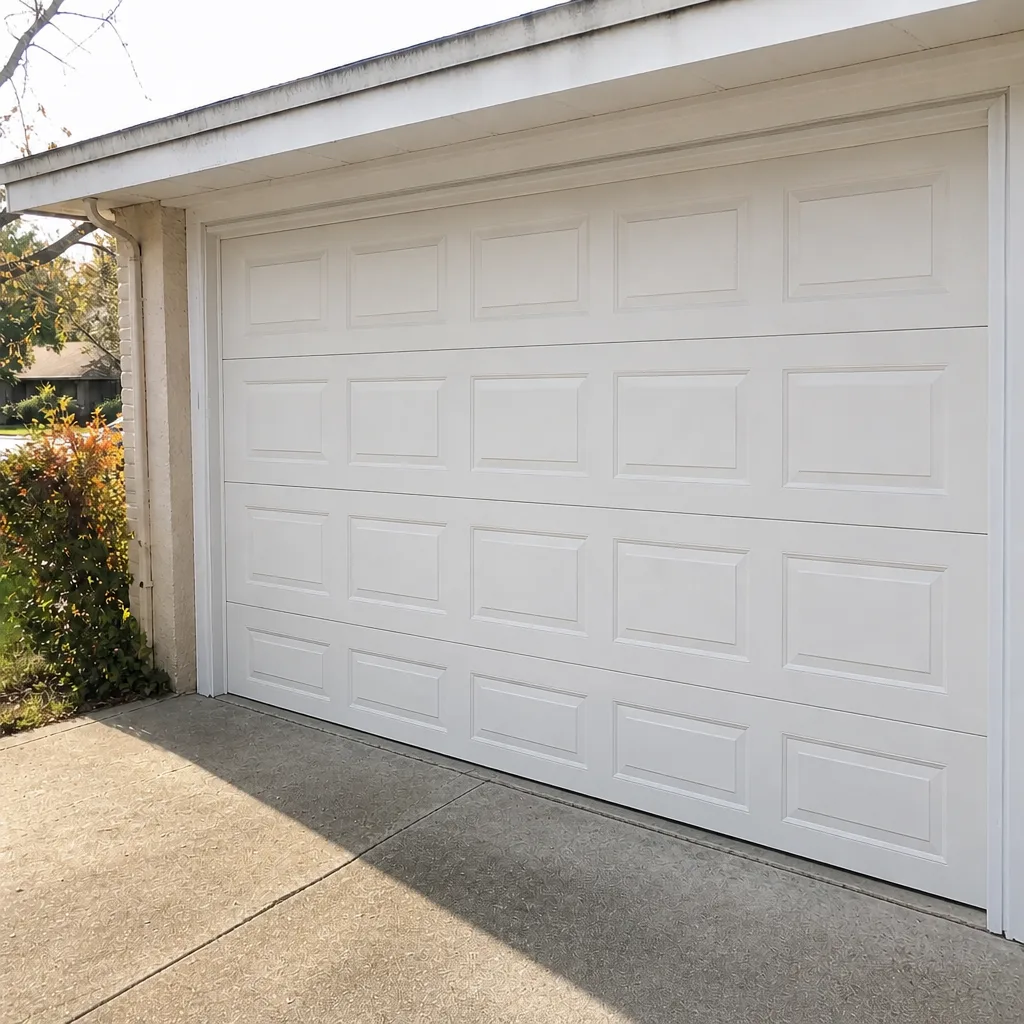
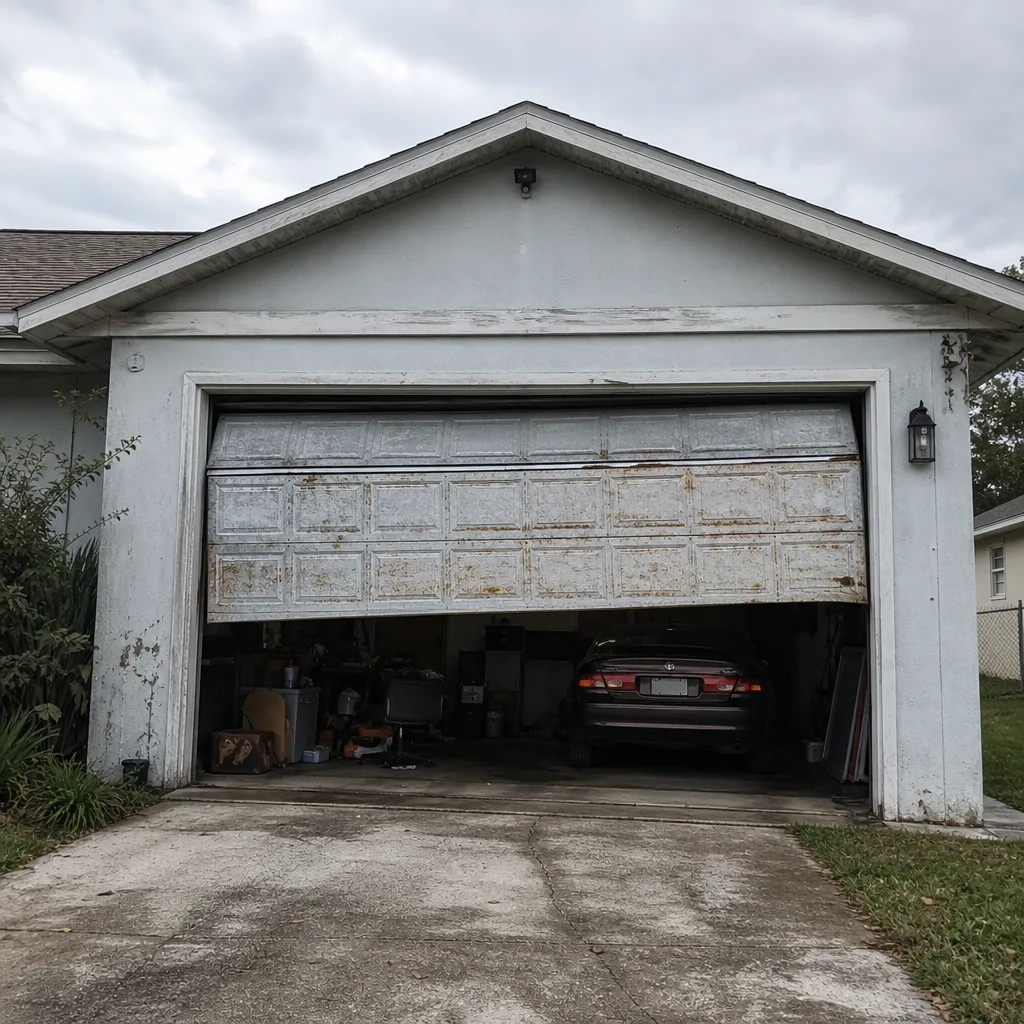
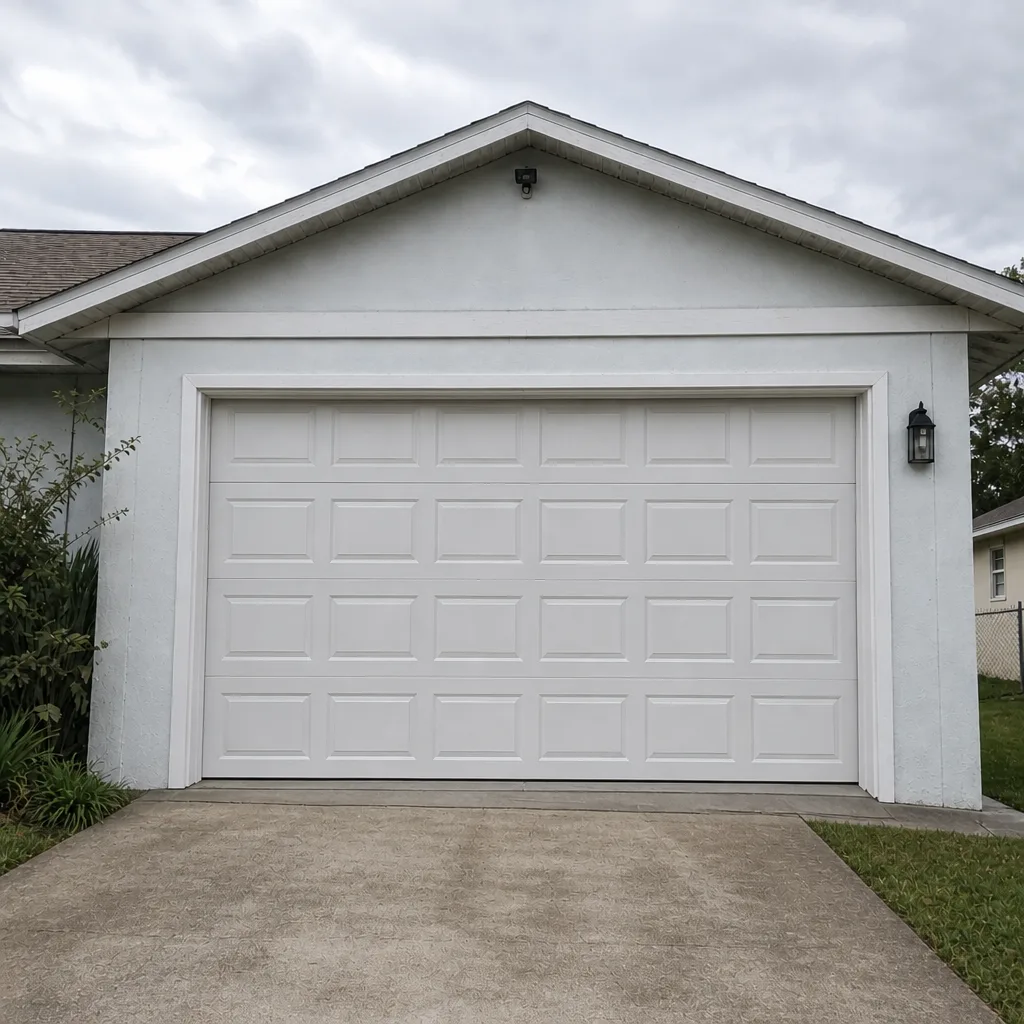
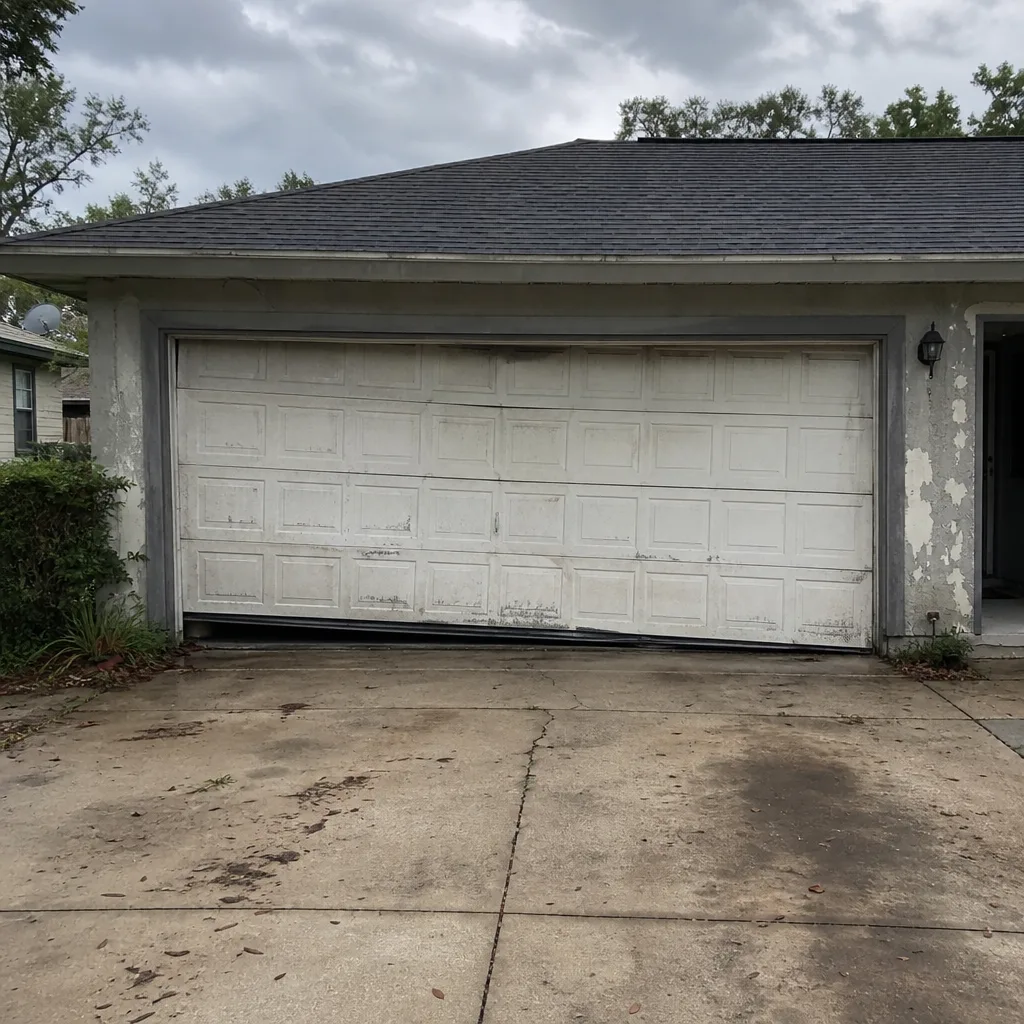
See the difference
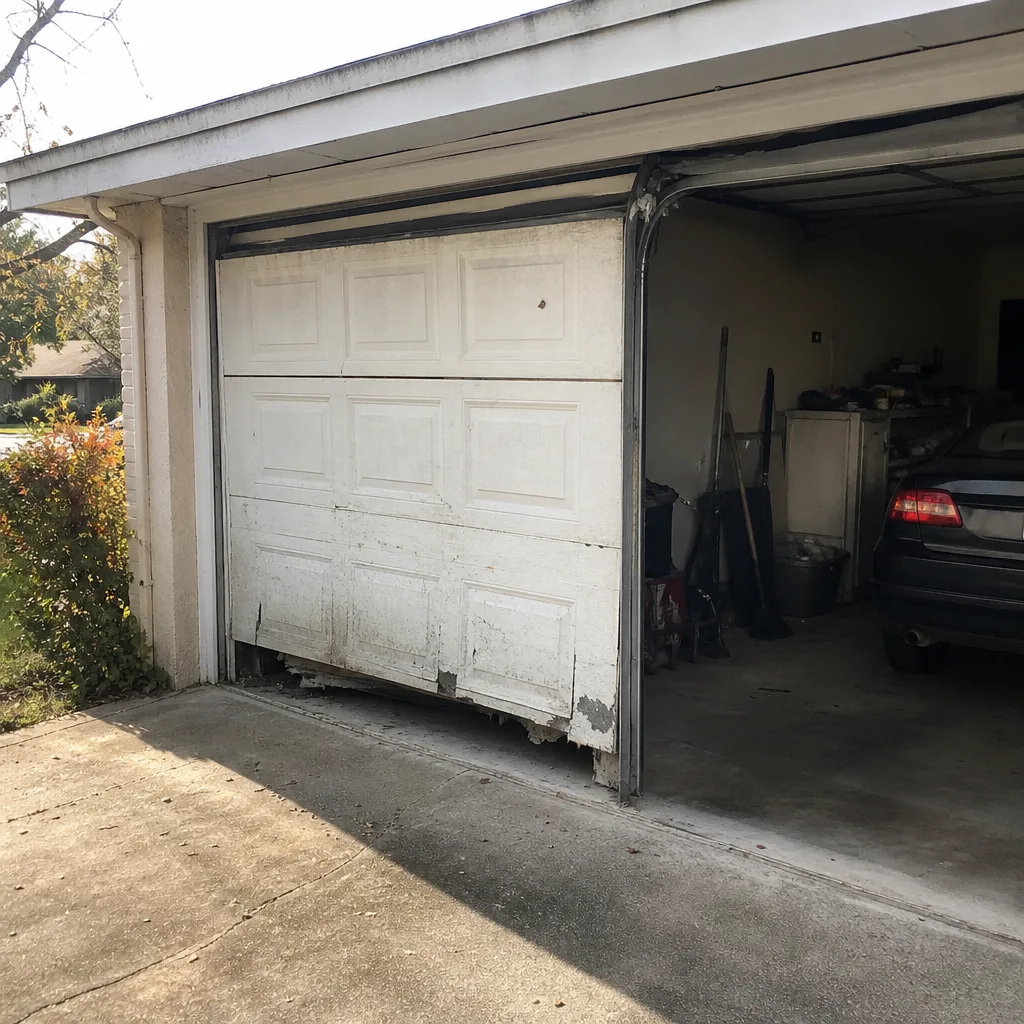 Before
 After
 Before
 After
 Before
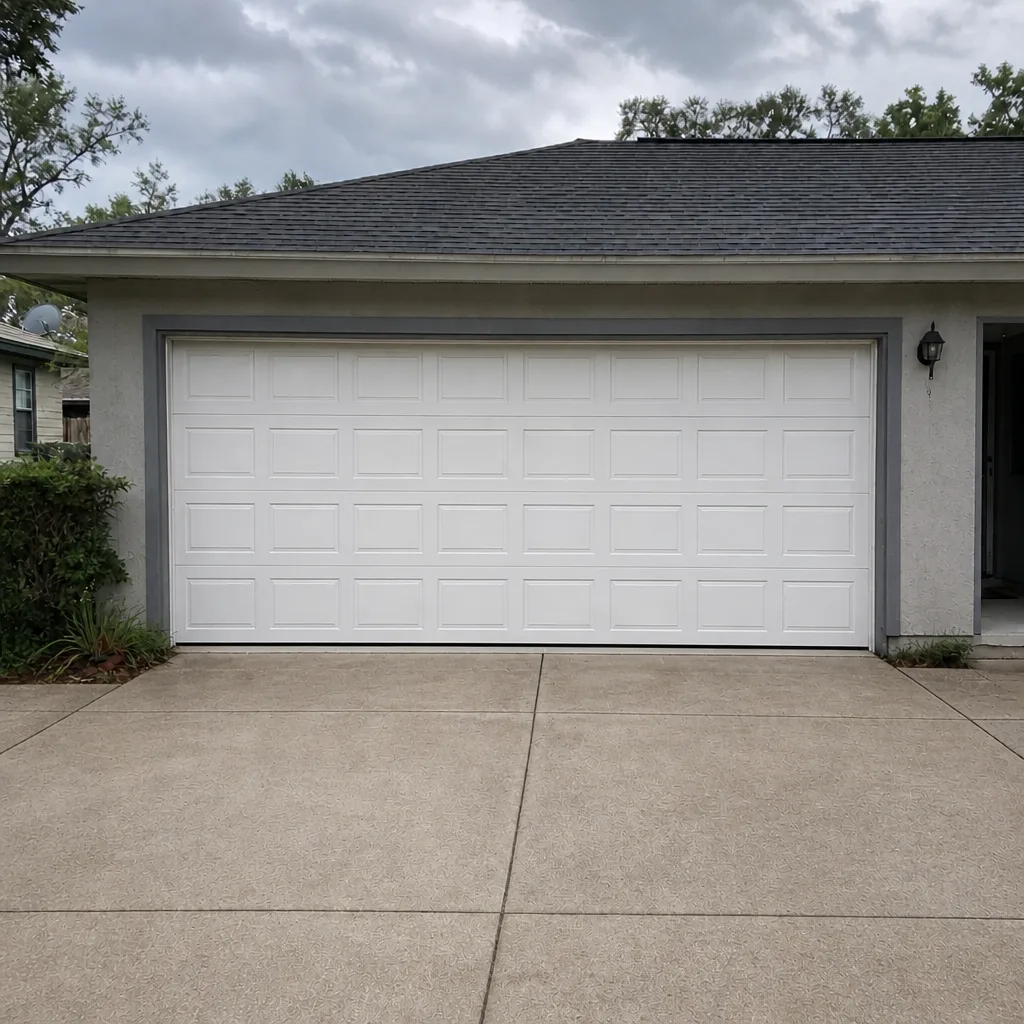 After
When to Call a Professional
Some garage door work is genuinely dangerous and belongs with a trained specialist. Torsion springs, cables, and anything that involves releasing tension stored in the assembly are the big ones – a broken spring under tension can cause serious injury to someone without the right tools and the right method, and that’s why so many general handymen decline the job. The same goes for header bracket work, since a failed anchor is a structural and safety problem at once. If your door’s opener is acting up and you can’t tell whether the problem is the opener or the door’s balance, that’s a call too – a specialist can diagnose which one it is in minutes rather than replacing parts on a guess. Our technicians have up to 10 years of experience with these systems across the major brands, and we’re fluent in the quirks that separate a Genie from a Chamberlain in a way that a generalist isn’t. Plant City Garage Door Repair Pros offers free estimates in Plant City – call (866) 329-6292. We answer 24/7, with fast dispatch from 7am to 7pm, Sunday through Friday. The price is quoted and agreed before any work starts, and the written estimate is the number you pay.
Frequently Asked Questions
Yes, replacing a garage door in Plant City generally requires a building permit through Hillsborough County because the door is part of the building envelope and carries a wind-load rating. Repair work like spring, opener, or single-section replacement typically doesn’t require a permit. If you’re not sure which side of the line your job falls on, ask the Hillsborough County building department before work starts. Call (866) 329-6292 for a free estimate if you need the work itself handled.
No. A spring-only repair doesn’t require a permit in Plant City because it doesn’t alter the wind-load rating of the door assembly. Springs are components, not a structural change. The tradeoff is that spring work is one of the most dangerous jobs in this trade and should always be done by a trained specialist. Our garage door spring repair work covers both springs if they’re a matched pair, which is the usual case.
No. Plant City is in Hillsborough County, which is outside the High-Velocity Hurricane Zone. That means the county uses the standard Florida Building Code wind requirements rather than the HVHZ-specific product approval system used in Broward and Miami-Dade. The permit requirement still applies, and the door still has to meet the calculated wind load for the specific address. Owners sometimes assume non-HVHZ means no rules; that’s not the case.
Look it up on the Hillsborough County online permit lookup by address or permit number – it takes about 90 seconds and it’s free. Ask your contractor for the permit number in writing before work starts, then verify the permit is active and the scope matches the job. After the work is done, confirm the inspection passed and the permit was closed, and keep a copy with your home documents. Call (866) 329-6292 if you need a free estimate and want to talk through the permit path first.
The most common reasons are a missing or mismatched wind-load label, an improperly installed header bracket, a wrong-rated or wrongly placed opener, and assembly hardware that doesn’t match the approved design. Track anchoring problems and blocked manual releases also cause failures. All of these are installation-quality issues that are avoidable when the work is done by a garage door specialist. If you’re scheduling an inspection, call and we can help you get ahead of the likely issues.
The title company and the buyer’s lender pull the permit history during the sale, and an unpermitted door or an open permit gets flagged. Depending on the lender, that can delay closing, require a retroactive permit, or become a negotiation point. Often the seller ends up applying for the permit retroactively and arranging the inspection after the contract is signed. Call (866) 329-6292 if you’re heading toward a sale and want the work checked or redone properly.
The Bottom Line
A garage door in Plant City is part of the building envelope, and Hillsborough County treats full replacement as a permitted, inspected job. Repair work – springs, openers, and hardware – generally isn’t. The confusing part is the middle ground, and that’s exactly where shortcuts cost you later. Pull the permit for replacement, verify it yourself on the county lookup, keep the closed permit with your home documents, and don’t let anyone start work without a permit number in writing. The permit protects you at claim time and at resale time, and the 90-second check is worth more than it looks.
If your garage door needs repair, replacement, or a diagnosis before you decide which path you’re on, call Plant City Garage Door Repair Pros at (866) 329-6292 for a free estimate. We answer 24/7, with fast dispatch from 7am to 7pm, Sunday through Friday. The price is quoted and agreed before any work starts. We work on the brand you already own – LiftMaster, Chamberlain, Genie, Clopay, Amarr, Wayne Dalton, Craftsman, and Raynor – and we’re specialists, not generalists. Back in working order today is the goal on repair work; on replacement, it’s a free measure, a written price, and a permit record you can hand the title company with confidence. Our garage door repair team handles both ends of that job.
Written by the team at Plant City Garage Door Repair Pros.